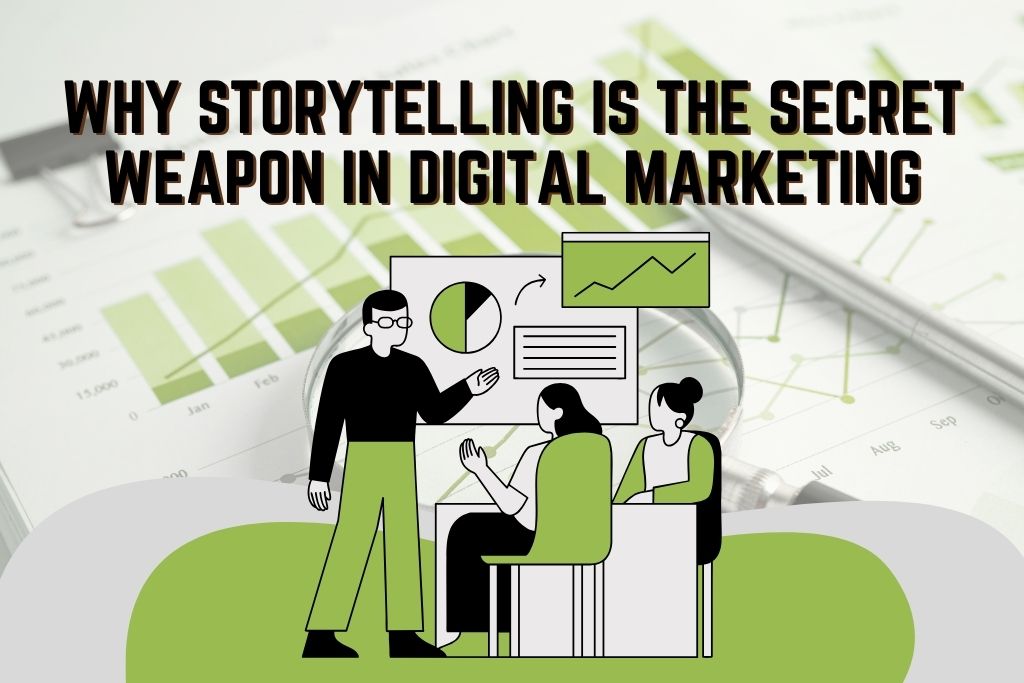
The Surprising Power of Storytelling in Digital Marketing
- The Science Behind Storytelling in Marketing
- Why Storytelling Outperforms Traditional Marketing
- Elements of Great Brand Storytelling
- Real-World Examples of Storytelling in Digital Marketing
- 1. Airbnb’s “Belong Anywhere”
- 2. Dove’s “Real Beauty”
- 3. Spotify Wrapped
- How to Use Storytelling in Your Digital Marketing Strategy
- 1. Tell Customer Stories (Testimonials with a Twist)
- 2. Use Storytelling in Social Media
- 3. Infuse Storytelling into Content Marketing
- 4. Storytelling in Ads
- 5. Leverage Data Storytelling
- Actionable Storytelling Tips for Businesses
- Common Mistakes to Avoid in Storytelling
- Future of Storytelling in Digital Marketing
- Case Study: From Flat to Fantastic (Agency Example)
- Conclusion: Your Story = Your Superpower
In today’s noisy digital world—where consumers are bombarded with 6,000 to 10,000 ads every day—brands that thrive are the ones that tell stories, not just sell products. Storytelling taps into human emotion, builds trust, and creates connections that drive conversions in ways raw data or product specs simply can’t.
Imagine this: you’re scrolling through Instagram and two story ads pop up.
The first? A generic product shot with a “Buy Now” button.
The second? A 30-second video of a woman explaining how that same product helped her confidently ace a big presentation after weeks of self-doubt.
Which one do you remember? Which one makes you want to click?
That’s the magic of storytelling in digital marketing.
Let’s dive into why storytelling works, how businesses (big and small) can harness it, and some real-world strategies you can use today.
The Science Behind Storytelling in Marketing
Storytelling isn’t just a marketing buzzword—it’s psychology.
-
Stories activate the brain differently. Neuroscience shows that when we hear a story, multiple parts of our brain light up—not just the language-processing areas, but also those tied to emotion and memory.
-
Emotions drive decisions. Studies reveal that 95% of purchasing decisions are subconscious and emotionally driven. A relatable story makes your brand “stick” far more effectively than features or discounts.
-
Stories build trust. People don’t want to feel sold to; they want to feel understood. A strong brand story communicates values and creates a sense of belonging.
.
Why Storytelling Outperforms Traditional Marketing
Here’s why storytelling is so powerful compared to hard-sell marketing:
-
Cuts through the noise – Instead of just another ad, stories captivate.
-
Builds relatability – Consumers see themselves in your story.
-
Inspires loyalty – Stories create lasting brand love, not one-time clicks.
-
Boosts engagement – Story-driven content sees up to 22x more engagement on platforms like LinkedIn.
Think about Apple’s legendary campaigns. They rarely lead with “specs.” Instead, they show how their products empower creativity and change lives. That’s storytelling.
Elements of Great Brand Storytelling
Not every story sells. The most powerful ones include:
-
A Hero: Usually your customer, not your brand.
-
A Challenge: The pain point or problem they face.
-
A Guide: Your brand steps in with a solution.
-
A Transformation: The positive result after using your product/service.
This is basically the Hero’s Journey framework—a proven narrative arc humans have loved since ancient myths.
Example: Nike rarely talks about sneakers. Instead, their ads show everyday athletes overcoming obstacles. The shoes are the tool, but the story is about perseverance.
Real-World Examples of Storytelling in Digital Marketing
1. Airbnb’s “Belong Anywhere”
Instead of just selling rooms, Airbnb tells stories of travelers and hosts who connect through shared experiences. Their campaigns highlight community, adventure, and belonging—values far deeper than “cheap accommodation.”
2. Dove’s “Real Beauty”
Rather than focusing on soap or lotion, Dove tells stories about real women and self-confidence. That authenticity has created decades of brand loyalty.
3. Spotify Wrapped
Every year, Spotify gives users a personalized story of their year in music. It’s interactive, shareable, and makes customers the hero of the narrative.
How to Use Storytelling in Your Digital Marketing Strategy
1. Tell Customer Stories (Testimonials with a Twist)
Don’t just share reviews. Create mini case studies showing how your product changed someone’s life.
-
Before → After narratives
-
Video testimonials with emotion
-
Social posts featuring customer journeys
2. Use Storytelling in Social Media
-
Instagram Reels or TikToks with real customer experiences
-
LinkedIn posts sharing founder struggles or lessons
-
Twitter/X threads that tell a quick brand journey
3. Infuse Storytelling into Content Marketing
Blogs, videos, podcasts—all perform better when structured like stories.
Instead of “5 SEO Tips,” write: “How We Helped a Local Bakery Triple Sales with SEO”.
4. Storytelling in Ads
Facebook and YouTube ads with narratives outperform static product shots. Even a 15-second ad can tell a story if it has a hook, problem, and resolution.
5. Leverage Data Storytelling
Even numbers tell stories. Use infographics, charts, or “before vs. after” visuals to show how your services impact clients.
Actionable Storytelling Tips for Businesses
-
Know your audience deeply. The best stories mirror your customer’s life.
-
Keep it authentic. Consumers sniff out fake stories instantly.
-
Make your customer the hero. Your brand is the guide, not the star.
-
Use emotion + logic. Emotion pulls them in, logic seals the deal.
-
Be consistent. From website to email to ads, weave the same narrative.
-
Repurpose stories. A case study can become a video, infographic, and social media series.
Pro tip: Map out your buyer journey and create a story arc for each stage (awareness, consideration, decision).
Common Mistakes to Avoid in Storytelling
-
Being too brand-centric. Customers don’t care about your history as much as they care about their problems.
-
Overcomplicating the story. Keep it simple, clear, and focused.
-
Forgetting the CTA. A great story should still guide people toward action.
-
Ignoring inclusivity. Your stories should reflect diverse, real-world experiences to truly connect.
Future of Storytelling in Digital Marketing
Storytelling is evolving with technology:
-
Interactive storytelling: Polls, quizzes, choose-your-own-adventure style content.
-
AR/VR experiences: Immersive brand stories in virtual spaces.
-
AI-powered personalization: Hyper-personalized storytelling for each user.
-
Short-form video dominance: TikTok and Reels push brands to tell stories in under 30 seconds.
Brands that adapt storytelling to these new formats will stay ahead of the curve.
Case Study: From Flat to Fantastic (Agency Example)
One of our clients—a local fitness studio—was struggling with low engagement despite offering great services.
Instead of pushing promotions, we rebranded their campaigns around personal transformation stories of real members:
-
Before joining → struggling with motivation
-
After joining → newfound confidence, health, and community
Within 3 months:
-
Website engagement grew by 67%
-
Social shares tripled
-
Membership sign-ups increased by 40%
Why? Because people don’t connect with “discounted memberships.” They connect with transformation stories.
Conclusion: Your Story = Your Superpower
In the end, digital marketing isn’t just about clicks or impressions—it’s about connections. And nothing connects faster, deeper, and longer-lasting than a good story.
If your brand feels like it’s blending into the digital noise, it’s time to step back and ask:
Are we telling stories, or just selling products?
At Hypedge , we help startups and businesses craft story-driven marketing strategies that engage audiences, boost conversions, and build loyalty.