Hyperlocal Marketing: Targeting Audiences in Your Immediate Area
- What is Hyperlocal Marketing?
- Example:
- Why Hyperlocal Marketing Matters in 2025
- 1. Rise of “Near Me” Searches
- 2. Voice Search Revolution
- 3. Mobile-First Era
- 4. Increased Competition
- Benefits of Hyperlocal Marketing
- 1. Better Conversion Rates
- 2. Enhanced Customer Engagement
- 3. Improved Local SEO
- 4. Cost-Effective Advertising
- 5. Builds Community Trust
- How Hyperlocal Marketing Works
- Effective Strategies for Hyperlocal Marketing
- 1. Optimize Your Google Business Profile (GBP)
- 2. Leverage Hyperlocal SEO
- 3. Use Geo-Targeted Advertising
- 4. Harness Social Media with Local Hashtags
- 5. Implement Location-Based Push Notifications
- 6. Engage in Local Sponsorships & Events
- 7. Use Hyperlocal Content Marketing
- 8. Partner with Local Businesses
- Key Metrics to Measure Hyperlocal Success
- Future Trends in Hyperlocal Marketing (2025 and Beyond)
- 1. AI-Powered Location Targeting
- 2. AR (Augmented Reality) Experiences
- 3. Voice Search Optimization
- 4. Integration with IoT Devices
- Common Mistakes to Avoid
- Final Thoughts: Why You Should Invest in Hyperlocal Marketing
- Key Takeaways
In today’s fast-paced digital landscape, businesses are shifting focus from global to local. As consumers increasingly search for products and services “near me,” the power of Hyperlocal Marketing has never been more relevant. Whether you’re a small business owner, a local retailer, or a service provider, understanding how to effectively target audiences in your immediate area can skyrocket your visibility, foot traffic, and sales.
This comprehensive guide explores what Hyperlocal Marketing is, why it matters in 2025, and how you can implement it strategically to outperform competitors on Google SERP and in your local community.
What is Hyperlocal Marketing?
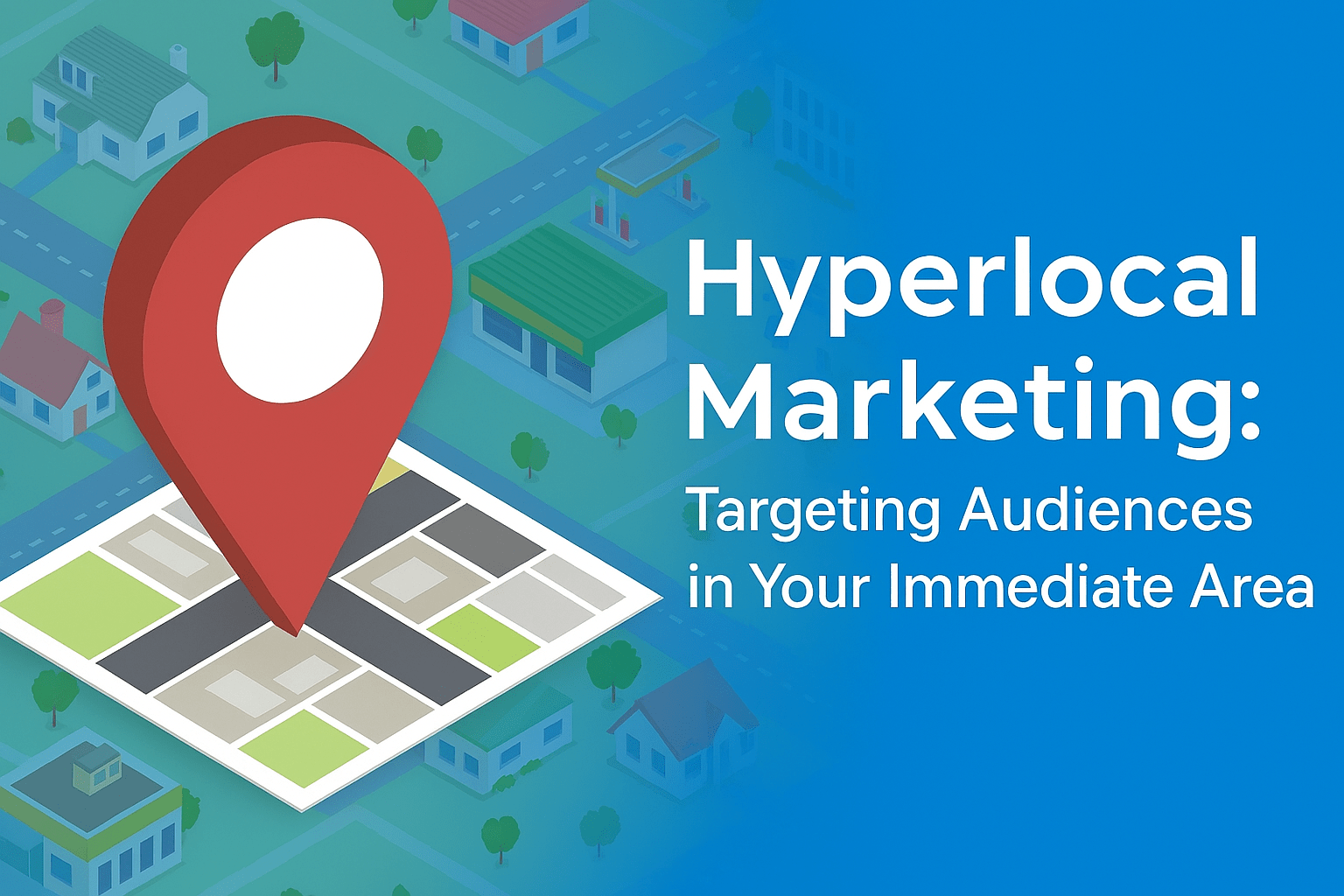
Hyperlocal Marketing refers to targeting customers within a specific geographic area — often as small as a neighborhood, street, or even a building radius. The goal is to connect with potential customers near your business location by delivering personalized, relevant, and timely marketing messages.
Unlike traditional local marketing that might target a city or region, hyperlocal campaigns zoom in on micro-locations using precise data such as GPS, ZIP codes, or real-time user locations.
Example:
-
A café running an ad for users within 500 meters offering “20% off your first latte today.”
-
A salon sending push notifications to users walking past their store.
This precision-based strategy makes Hyperlocal Marketing one of the most ROI-driven marketing methods for small and mid-sized businesses in 2025.
Why Hyperlocal Marketing Matters in 2025
The year 2025 marks a new era of personalized marketing and localized search behavior. Let’s explore why this matters more than ever:
1. Rise of “Near Me” Searches
According to Google, “near me” searches have increased by over 900% in the past five years. Consumers want instant solutions in their immediate surroundings, making Hyperlocal Marketing critical for visibility.
2. Voice Search Revolution
Voice assistants like Siri, Alexa, and Google Assistant are driving local intent searches such as:
-
“Find a pizza shop near me.”
-
“Best gyms open now.”
If your business leverages Hyperlocal SEO, you’ll appear in those results — capturing ready-to-buy customers.
3. Mobile-First Era
With 80% of local searches happening on mobile, consumers expect location-based results. Hyperlocal targeting allows you to reach them at the right place and time.
4. Increased Competition
As more businesses go digital, standing out locally gives you a competitive advantage. Instead of competing nationally, you dominate your hyperlocal area with relevant ads and strong local SEO.
Benefits of Hyperlocal Marketing
Implementing Hyperlocal Marketing delivers measurable business benefits that go beyond brand awareness.
1. Better Conversion Rates
Customers searching within a small radius usually have high purchase intent. They’re not just browsing — they’re looking to buy now. Targeting them increases conversion rates by up to 50%.
2. Enhanced Customer Engagement
Personalized offers, location-based deals, and proximity notifications make your audience feel valued and understood.
3. Improved Local SEO
By optimizing for local keywords, Google Business Profiles, and maps, your brand gains stronger visibility in local search results.
4. Cost-Effective Advertising
Since ads are shown only to nearby audiences, ad spend wastage is reduced. You reach people most likely to walk through your doors.
5. Builds Community Trust
When customers see your brand supporting local events, using geotags, or collaborating with nearby influencers, they develop authentic trust and loyalty.
How Hyperlocal Marketing Works
Hyperlocal marketing combines geo-targeting, real-time data, and personalized content. Here’s how it typically works:
-
Define Your Target Radius:
Choose how far you want to reach — 500 meters, 1 km, or an entire neighborhood. -
Use Location Data:
Platforms like Google Ads, Facebook Ads, and Instagram allow you to target users based on GPS or IP location. -
Craft Relevant Messages:
Tailor your content — such as “Visit our store in Andheri today” — to attract nearby customers. -
Optimize for Mobile:
Ensure your website and ads are mobile-friendly for quick actions like “Call Now” or “Get Directions.” -
Track Real-Time Performance:
Use analytics to monitor impressions, clicks, and conversions within your defined area.
Effective Strategies for Hyperlocal Marketing
Let’s dive into practical, actionable strategies to master Hyperlocal Marketing in 2025.
1. Optimize Your Google Business Profile (GBP)
Your Google Business Profile (formerly Google My Business) is the cornerstone of local visibility.
Action steps:
-
Add your business name, address, and phone number (NAP) consistently.
-
Upload high-quality photos and customer reviews.
-
Use relevant categories (e.g., “Vegan Café in Bandra”).
-
Post weekly updates and offers.
Pro Tip: Encourage happy customers to leave reviews with local keywords — this boosts your local ranking signals.
2. Leverage Hyperlocal SEO
SEO isn’t just about global keywords anymore. It’s about local intent.
Focus on:
-
Keywords like “near me,” “in [city/area],” and “open now.”
-
Creating location-based landing pages.
-
Embedding Google Maps on your contact page.
-
Writing blogs on local events or community stories.
Example keywords:
“best dentist in Pune,” “organic stores near me,” “local marketing agency in Mumbai.”
3. Use Geo-Targeted Advertising
Platforms like Google Ads and Meta Ads allow hyperlocal targeting by setting radius parameters.
Example:
A boutique store in Delhi can show ads only to people within 3 km radius, during peak shopping hours.
Benefits:
-
Reduces wasted impressions
-
Increases ad relevance
-
Improves ROI
4. Harness Social Media with Local Hashtags
Social platforms are powerful for hyperlocal reach.
Actionable tips:
-
Use local hashtags: #HyderabadEats, #BangaloreFitness.
-
Tag your store location in every post.
-
Collaborate with local micro-influencers who speak to your area audience.
This builds organic local visibility and community engagement.
5. Implement Location-Based Push Notifications
If you have an app or website, use geo-fencing to send push notifications to users nearby.
Example:
“A hot coffee is waiting just 200m away at BrewCo Café!”
This real-time personalization boosts conversion and encourages instant action.
6. Engage in Local Sponsorships & Events
Offline engagement is just as vital. Sponsor:
-
Local sports events
-
Charity drives
-
School fests
These create brand recall and drive offline-to-online engagement.
7. Use Hyperlocal Content Marketing
Develop content that speaks to your neighborhood.
Examples:
-
Blog: “Top 5 Weekend Spots in Bandra”
-
Video: “Behind the Scenes of Our Andheri Bakery”
-
Infographic: “The Rise of Local Businesses in Delhi NCR”
Local storytelling connects emotionally and strengthens your brand identity.
8. Partner with Local Businesses
Cross-promotions are a win-win.
Example:
A fitness studio partnering with a nearby juice bar for mutual promotions.
Result:
Shared audience, stronger foot traffic, and community-based credibility.
Key Metrics to Measure Hyperlocal Success
Tracking results ensures you refine strategies effectively. Monitor:
-
Foot Traffic Analytics (using Wi-Fi or beacon data)
-
Click-to-Call Conversions
-
Google Map Direction Requests
-
Local Keyword Rankings
-
Review Volume & Sentiment
These indicators help determine if your Hyperlocal Marketing campaigns are driving tangible results.
Future Trends in Hyperlocal Marketing (2025 and Beyond)
The future of Hyperlocal Marketing is intelligent, data-driven, and hyper-personalized. Here’s what’s next:
1. AI-Powered Location Targeting
AI tools analyze behavioral data and optimize local ads in real-time, helping businesses target micro-moments effectively.
2. AR (Augmented Reality) Experiences
Retail stores will use AR to display nearby offers or product previews to users walking past.
3. Voice Search Optimization
Businesses will increasingly optimize for conversational, location-based queries, e.g., “What’s the best sushi restaurant near me right now?”
4. Integration with IoT Devices
Smart cars, watches, and devices will soon deliver location-based marketing messages seamlessly integrated into daily life.
Common Mistakes to Avoid
-
Ignoring NAP Consistency
Ensure your business name, address, and phone number match across all platforms. -
Overusing Keywords
Keyword stuffing reduces readability and SEO performance. -
Neglecting Mobile Optimization
80% of hyperlocal searches happen on mobile — make your site fast and responsive. -
Not Tracking Metrics
Always measure engagement, conversions, and local search ranking.
Final Thoughts: Why You Should Invest in Hyperlocal Marketing
In an era where personalization drives purchase decisions, Hyperlocal Marketing offers unmatched potential. It lets businesses connect with customers where it matters most — their immediate environment.
From optimizing your Google Business Profile to running geo-targeted ads and creating locally relevant content, the opportunities are endless. The key is consistency, authenticity, and data-backed execution.
If your business isn’t visible to customers searching “near me,” you’re missing out on the most valuable audience segment — the one right outside your door.
Key Takeaways
-
Hyperlocal Marketing focuses on micro-targeting within small geographic zones.
-
It boosts engagement, conversions, and community presence.
-
Combining SEO, social media, and mobile optimization ensures success.
-
Future trends like AI and AR will redefine how brands interact locally.
In 2025, Hyperlocal Marketing isn’t just a trend — it’s a necessity for business growth. By targeting audiences in your immediate area, you build deeper connections, increase walk-ins, and strengthen brand trust. Whether you run a café, salon, clinic, or retail store, hyperlocal strategies will ensure you stay relevant, visible, and profitable in an increasingly competitive digital world.