Performance Marketing Strategies That Maximize ROI in Competitive Markets
- Understanding Performance Marketing in the Modern Digital Landscape
- Why Performance Marketing Matters Today
- Market Context: The Rise of Paid Advertising and ROI Accountability
- India and Global Growth Trends
- The Shift Toward Performance
- Core Performance Marketing Strategies for High ROI
- 1. Intent-Based Paid Advertising (Search & Social)
- 2. Conversion Optimization: Turning Traffic into Revenue
- 3. Retargeting and Remarketing for Higher ROI
- 4. Omnichannel Attribution and Budget Optimization
- Advanced Performance Marketing Framework for Scalable Growth
- The 5-Step ROI Optimization Model
- Lead Generation Strategies for Service-Based Businesses
- High-Performing Lead Generation Tactics
- Common Performance Marketing Challenges (and How to Solve Them)
- 1. Rising Customer Acquisition Costs
- 2. Ad Fatigue
- 3. Poor Attribution
- 4. Over-Reliance on Performance Alone
- Location-Focused Performance Marketing: India, Tricity & Global Markets
- Why Localized Performance Marketing Matters
- Future Trends Shaping Performance Marketing
- 1. AI-Driven Campaign Optimization
- 2. First-Party Data Strategy
- 3. Video-First Paid Advertising
- 4. Performance + Brand Integration
- FAQs: Performance Marketing
In today’s hyper-competitive digital economy, businesses are no longer judged by visibility alone—they are measured by results. Every marketing rupee must deliver measurable outcomes such as leads, sales, or customer acquisition. This shift has made performance marketing the foundation of modern growth strategies. By implementing data-driven performance marketing strategies, businesses can optimize paid campaigns, improve conversion rates, and achieve measurable ROI in increasingly competitive markets.
This article explores advanced performance marketing strategies that help businesses scale efficiently, reduce acquisition costs, and achieve sustainable growth in competitive markets.
Understanding Performance Marketing in the Modern Digital Landscape
Performance marketing is a results driven approach where advertisers pay based on measurable actions clicks, leads, conversions, or sales rather than impressions alone.
Why Performance Marketing Matters Today
-
Global digital ad spending is projected to exceed $800 billion by 2026.
-
Digital channels now account for over 70% of total media spend worldwide.
-
Businesses increasingly invest in channels where ROI and attribution are clear.
For service businesses, startups, and enterprises alike, performance marketing ensures:
-
Predictable growth
-
Data backed decision making
-
Efficient budget utilization
Market Context: The Rise of Paid Advertising and ROI Accountability
India and Global Growth Trends
-
India’s advertising market is expected to grow steadily, reinforcing its position among the world’s top markets.
-
Digital media now dominates, driven by mobile usage and social platforms.
-
India’s digital economy is projected to cross $1 trillion by 2030, expanding opportunities for digital customer acquisition.
The Shift Toward Performance
Businesses are moving from:
-
Brand awareness metrics → Revenue metrics
-
Traffic campaigns → Conversion-focused campaigns
-
Broad targeting → Intent-based targeting
Core Performance Marketing Strategies for High ROI
1. Intent-Based Paid Advertising (Search & Social)
High-performing campaigns focus on user intent, especially through:
Search Ads
-
Capture bottom-of-funnel demand
-
Deliver strong commercial intent
-
Average CTR around 3% across industries
Social Performance Campaigns
-
Advanced audience targeting
-
Lookalike and behavioral segmentation
-
Lead forms and conversion campaigns
Best Practices
-
Focus on high intent keywords
-
Align ad copy with landing page messaging
-
Use negative keywords to reduce wasted spend
2. Conversion Optimization: Turning Traffic into Revenue
Driving traffic is only half the equation. Conversion Rate Optimization (CRO) ensures that paid traffic generates business outcomes.
Key CRO Techniques
-
A/B testing landing pages
-
Improving page speed and mobile UX
-
Clear value propositions and CTAs
-
Trust signals (reviews, certifications, case studies)
Even small improvements in conversion rate can significantly reduce cost per acquisition.
3. Retargeting and Remarketing for Higher ROI
Retargeting is one of the most effective performance marketing strategies:
-
Retargeted users are 70% more likely to convert.
-
Retargeting ads generate 10x higher CTR than cold campaigns.
Strategies
-
Website visitor remarketing
-
Abandoned cart recovery
-
Sequential messaging across platforms
-
Dynamic product ads
4. Omnichannel Attribution and Budget Optimization
Customers interact with multiple touchpoints before converting. Successful performance marketing requires:
-
Multi-touch attribution models
-
Cross-channel tracking (Google, Meta, LinkedIn, YouTube)
-
Budget reallocation based on ROAS
Channel diversification improves sustainability and reduces dependency on a single platform.
Advanced Performance Marketing Framework for Scalable Growth
The 5-Step ROI Optimization Model
Step 1: Data Foundation
-
Conversion tracking
-
CRM integration
-
First-party data collection
Step 2: Audience Intelligence
-
Behavioral segmentation
-
Lookalike audiences
-
High-value customer profiling
Step 3: Creative Testing
-
Multiple ad formats
-
Short-form video (growing rapidly)
-
Message experimentation
Step 4: Funnel Optimization
-
Awareness → Consideration → Conversion
-
Custom messaging at each stage
Step 5: Continuous Optimization
-
Weekly performance analysis
-
Bid adjustments
-
Creative refresh cycles
Programmatic and AI-driven optimization now powers nearly 89% of digital display advertising, highlighting the importance of automation.
Lead Generation Strategies for Service-Based Businesses
For B2B and service industries, performance marketing focuses on qualified leads, not just traffic.
High-Performing Lead Generation Tactics
-
Google Search for high-intent queries
-
LinkedIn Ads for B2B targeting
-
Landing page lead magnets
-
WhatsApp and call extensions
-
Localized campaigns
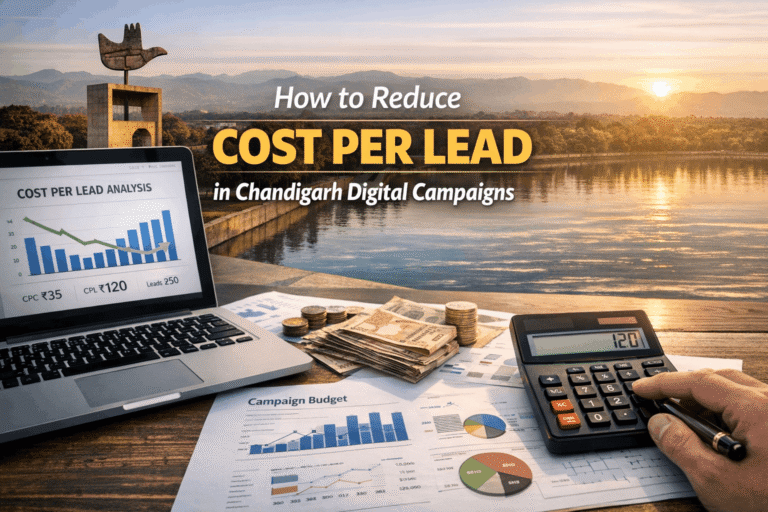
In competitive sectors, cost per lead can exceed $85, making quality optimization critical.
Common Performance Marketing Challenges (and How to Solve Them)
1. Rising Customer Acquisition Costs
Solution: Improve CRO, use retargeting, refine audience targeting.
2. Ad Fatigue
Solution: Refresh creatives every 4–6 weeks and test new formats.
3. Poor Attribution
Solution: Implement proper tracking and analytics integration.
4. Over-Reliance on Performance Alone
Research shows that balancing brand and performance can increase ROI by 25–100%.
Location-Focused Performance Marketing: India, Tricity & Global Markets
Why Localized Performance Marketing Matters
In regions like Chandigarh, Mohali, Panchkula, and Zirakpur, businesses face:
-
High competition in real estate, education, healthcare, and services
-
Local search-driven buying behavior
-
Mobile-first users
Local Performance Strategies
-
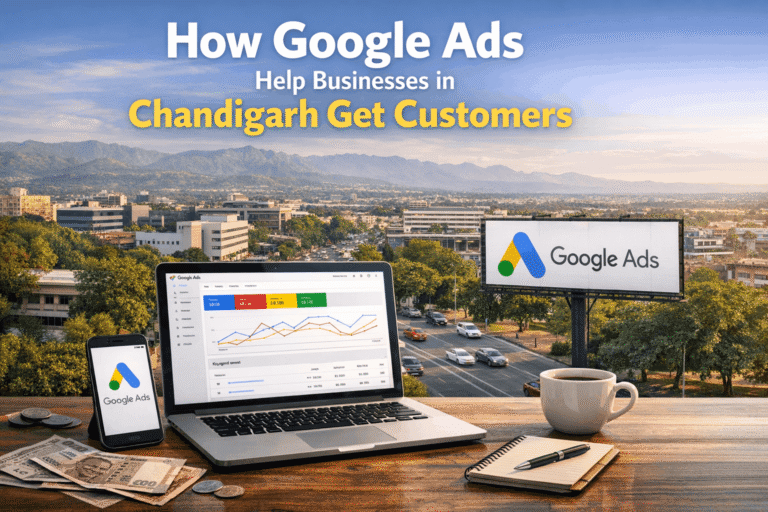
Geo-targeted Google Ads
-
“Near me” keyword campaigns
-
Google Business Profile integration
-
Regional language creatives
-
Hyper-local audience segmentation
At the national level, India’s mobile-first ecosystem—where mobile accounts for over 70% of digital ad consumption—makes localized mobile optimization essential.
Globally, performance marketing enables businesses to:
-
Scale into new markets
-
Test demand before expansion
-
Optimize campaigns region-wise
Future Trends Shaping Performance Marketing
1. AI-Driven Campaign Optimization
Over 80% of marketers report ROI from AI adoption.
2. First-Party Data Strategy
Privacy regulations are increasing reliance on owned customer data.
3. Video-First Paid Advertising
Video is expected to account for over 80% of internet traffic.
4. Performance + Brand Integration
Long-term growth requires balancing immediate conversions with brand building.
FAQs: Performance Marketing
1. What is performance marketing?
Performance marketing is a digital marketing approach where advertisers pay only for measurable results such as clicks, leads, or sales.
2. Which channels deliver the best ROI?
Google Search, retargeting campaigns, email marketing, and high-intent social campaigns typically deliver strong ROI.
3. How does conversion optimization improve performance?
By improving landing pages and user experience, businesses generate more conversions from the same traffic, reducing acquisition costs.
4. Is performance marketing suitable for small businesses?
Yes. It allows controlled budgets, precise targeting, and measurable results, making it ideal for startups and local businesses.
5. How long does it take to see results?
Paid campaigns can generate results within weeks, but optimal ROI typically develops over 2–3 months of continuous optimization.
6. What is the difference between lead generation and performance marketing?
Lead generation is one objective within performance marketing, focused specifically on acquiring qualified prospects.
As digital ecosystems expand across India, the Tricity region, and global markets, businesses that adopt structured performance marketing strategies gain a measurable competitive advantage. A disciplined, insight driven approach supported by strong analytics, localized targeting, and long-term optimization creates scalable and sustainable growth.
For organizations seeking a strategic partner mindset, the future of marketing lies not in campaigns alone, but in building performance driven growth systems aligned with business outcomes.