Lead Generation Systems That Convert Traffic into Revenue
- Understanding Lead Generation Systems in the Modern Digital Economy
- Why Lead Generation Systems Matter More Than Ever
- Market Context: Lead Generation in a Performance-Driven Era
- Shifting from Campaigns to Systems
- Core Components of High-Performance Lead Generation Systems
- 1. Traffic Acquisition Layer
- 2. Audience Segmentation and Intent Mapping
- 3. Conversion Architecture
- 4. Lead Qualification and Scoring
- 5. Nurturing and Retention Layer
- Strategic Best Practices for Sales Funnel Optimization
- Align Content with Buyer Stages
- Test and Iterate Continuously
- Integrate Automation Thoughtfully
- Common Challenges in Lead Generation Systems
- 1. Low Lead Quality
- 2. Funnel Leakage
- 3. Data Silos
- 4. Overdependence on Paid Channels
- Practical Framework: Building a Lead Generation System Step by Step
- Step 1: Define Revenue Objectives
- Step 2: Map User Intent
- Step 3: Design Funnel Stages
- Step 4: Deploy Performance Marketing Channels
- Step 5: Optimize Continuously
- Future Trends in Lead Generation Systems
- AI-Driven Personalization
- Conversational Interfaces
- Privacy-Centric Data Models
- Integrated Growth Platforms
- Location Based Perspective: Lead Generation Systems in India and Global Markets
- India and Tricity Region (Chandigarh, Mohali, Panchkula, Zirakpur)
- Global Markets
- The Role of Digital Marketing Agencies in System Design
- FAQs: Lead Generation Systems
- 1. What is a lead generation system?
- 2. How does sales funnel optimization improve results?
- 3. Is performance marketing only about paid advertising?
- 4. Why are lead generation systems important for service businesses?
- 5. How long does it take to see results from a lead generation system?
- 6. Can small businesses use lead generation systems effectively?
In an increasingly competitive digital economy, businesses can no longer rely on isolated campaigns or sporadic marketing efforts to drive sustainable growth. What separates high-performing brands from those struggling to scale is not just traffic volume—but the lead generation systems they use to transform attention into predictable revenue.
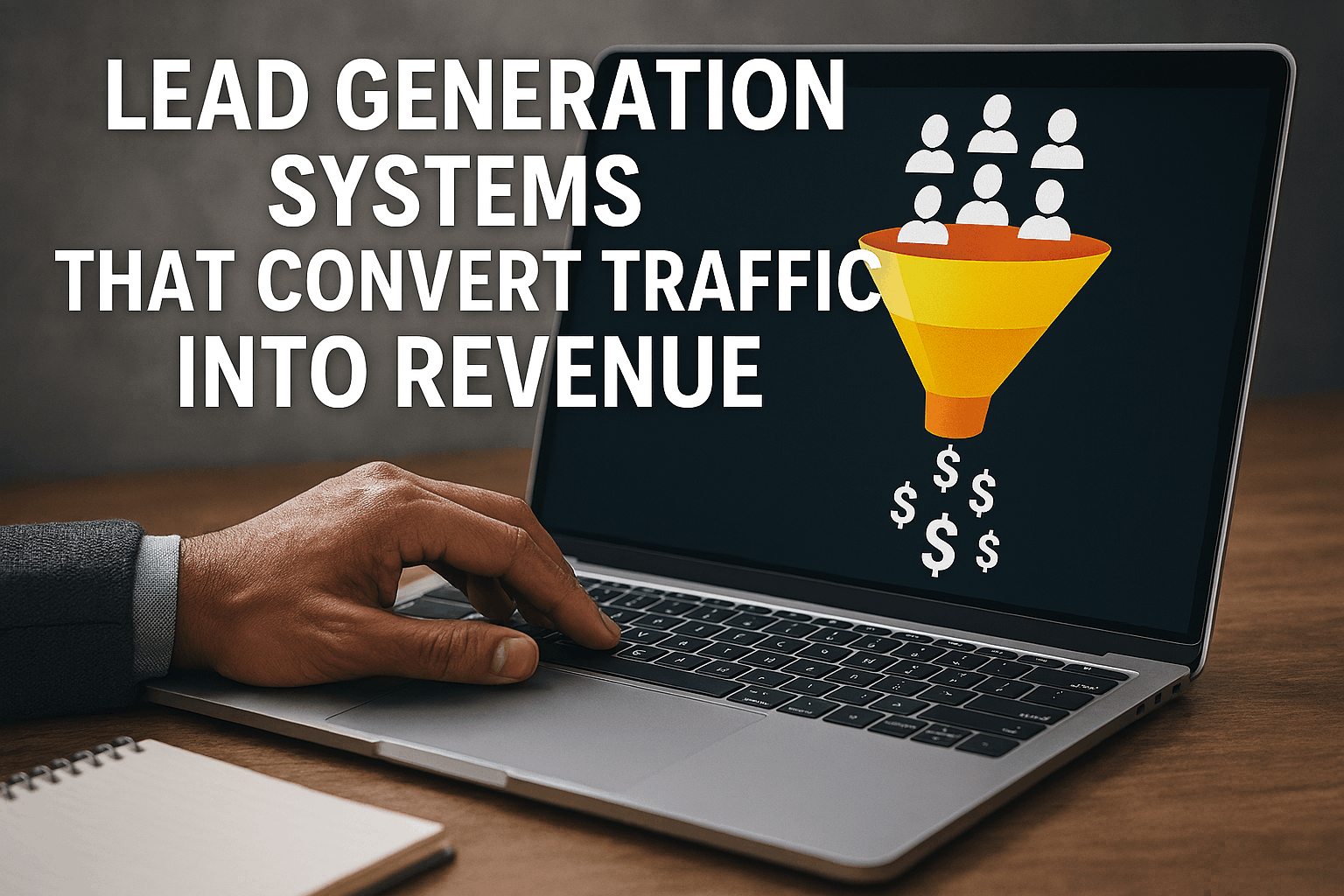
A modern lead generation system is more than a website form or a paid ad. It is a structured, data-driven framework that integrates traffic acquisition, audience targeting, content strategy, conversion pathways, and post-lead nurturing. When aligned with sales funnel optimization, performance marketing, and long-term brand building, these systems act as revenue engines rather than cost centers.
This article explores how effective lead generation systems work, why they matter in today’s market, and how organizations—especially those working with a professional digital marketing agency—can design scalable, ethical, and conversion-focused frameworks that support long-term growth.
Understanding Lead Generation Systems in the Modern Digital Economy
A lead generation system is a repeatable process that captures user interest and converts it into qualified business opportunities. Unlike traditional marketing funnels, modern systems operate across multiple channels and touchpoints, combining technology, behavioral data, and strategic content.
Why Lead Generation Systems Matter More Than Ever
Several market forces make structured systems essential:
-
Rising acquisition costs across paid platforms
-
Shorter attention spans and fragmented customer journeys
-
Greater reliance on trust signals before purchase
-
Algorithm-driven visibility on search engines and social platforms
Without a systemized approach, businesses risk spending more to acquire less-qualified leads. Strategic sales funnel optimization ensures every interaction—click, view, or download—moves the user closer to a business outcome.
Market Context: Lead Generation in a Performance-Driven Era
In earlier digital models, traffic volume was often treated as success. Today, outcomes are measured by lead quality, lifetime value, and conversion efficiency. This has reshaped how organizations approach performance marketing.
Shifting from Campaigns to Systems
Instead of:
-
Running isolated ads
-
Publishing unstructured content
-
Using generic landing pages
High-growth businesses build:
-
Audience-specific funnels
-
Automated qualification workflows
-
Content mapped to decision stages
-
Analytics-based optimization loops
This transition reflects a broader shift in digital marketing agency practices—from service delivery to strategic architecture.
Core Components of High-Performance Lead Generation Systems
A functional system is built on interconnected parts that work together as one ecosystem.
1. Traffic Acquisition Layer
Traffic is the entry point. It typically includes:
-
Search engine optimization (SEO)
-
Paid media campaigns
-
Social media distribution
-
Referral and partnership channels
The goal is not just visibility but relevance—bringing in users aligned with business objectives.
2. Audience Segmentation and Intent Mapping
Not all visitors are equal. Effective lead generation systems categorize users based on:
-
Industry or role
-
Search intent
-
Behavioral signals
-
Engagement depth
This segmentation enables personalized experiences, which directly supports sales funnel optimization.
3. Conversion Architecture
Conversion points include:
-
Landing pages
-
Gated content
-
Contact forms
-
Chat or conversational tools
Design principles focus on:
-
Clarity over creativity
-
Value exchange over persuasion
-
Friction reduction
4. Lead Qualification and Scoring
Modern systems apply logic to determine lead readiness:
-
Engagement frequency
-
Content consumed
-
Time spent on site
-
Source of acquisition
This step ensures sales teams interact with leads that demonstrate genuine intent.
5. Nurturing and Retention Layer
Lead generation does not end at form submission. Post-conversion workflows often include:
-
Educational email sequences
-
Retargeting campaigns
-
Progressive profiling
-
CRM integration
This is where performance marketing intersects with long-term relationship building.
Strategic Best Practices for Sales Funnel Optimization
A funnel is only as effective as its weakest stage. Continuous optimization ensures alignment between user needs and business goals.
Align Content with Buyer Stages
Different users require different information:
-
Awareness stage: problem identification
-
Consideration stage: solution comparison
-
Decision stage: trust and validation
Mapping content to each stage improves relevance and conversion efficiency.
Test and Iterate Continuously
High-performing systems use:
-
A/B testing
-
Behavioral analytics
-
Conversion heatmaps
-
User flow analysis
Optimization is not a one-time effort; it is an ongoing process rooted in evidence.
Integrate Automation Thoughtfully
Automation supports scale but should not replace strategy. Smart automation includes:
-
Context-based follow-ups
-
Triggered messaging
-
Dynamic personalization
Used correctly, it strengthens—not weakens—the human element of marketing.
Common Challenges in Lead Generation Systems
Even structured systems face obstacles. Understanding these challenges helps businesses design more resilient strategies.
1. Low Lead Quality
Often caused by:
-
Broad targeting
-
Misaligned messaging
-
Incentives that attract non-buyers
Solution: refine segmentation and tighten value propositions.
2. Funnel Leakage
Users drop off due to:
-
Complex forms
-
Slow page load times
-
Unclear calls to action
Solution: simplify interfaces and reduce friction.
3. Data Silos
When tools do not communicate:
-
Insights are incomplete
-
Attribution becomes unreliable
Solution: centralize analytics and integrate platforms.
4. Overdependence on Paid Channels
Excessive reliance on ads increases risk. Sustainable systems balance:
-
Organic visibility
-
Brand-driven demand
-
Community and partnerships
Practical Framework: Building a Lead Generation System Step by Step
Below is a simplified strategic framework adaptable across industries:
Step 1: Define Revenue Objectives
Start with business goals:
-
Target markets
-
Sales cycle length
-
Revenue per lead
Step 2: Map User Intent
Identify:
-
Search behavior
-
Content preferences
-
Decision triggers
Step 3: Design Funnel Stages
Create distinct paths for:
-
Awareness
-
Engagement
-
Conversion
-
Retention
Step 4: Deploy Performance Marketing Channels
Select channels based on:
-
Cost efficiency
-
Audience presence
-
Measurement clarity
Step 5: Optimize Continuously
Measure:
-
Conversion rates
-
Lead quality
-
Time-to-close
-
Lifetime value
This closed-loop system ensures marketing supports long-term growth rather than short-term traffic spikes.
Future Trends in Lead Generation Systems
Emerging trends will reshape how businesses capture and convert demand.
AI-Driven Personalization
Predictive models will:
-
Adjust messaging dynamically
-
Identify intent patterns
-
Improve lead scoring accuracy
Conversational Interfaces
Chatbots and voice search will become:
-
Primary conversion points
-
Data collection tools
-
Relationship builders
Privacy-Centric Data Models
With regulatory changes:
-
First-party data becomes essential
-
Transparent value exchange grows
-
Trust becomes a conversion factor
Integrated Growth Platforms
Systems will merge:
-
Marketing automation
-
CRM
-
Analytics
-
Customer experience tools
This convergence supports more precise sales funnel optimization.
Location Based Perspective: Lead Generation Systems in India and Global Markets
Market maturity and buyer behavior vary by geography. Strategic lead generation systems must adapt accordingly.
India and Tricity Region (Chandigarh, Mohali, Panchkula, Zirakpur)
Key characteristics:
-
Rapid digital adoption
-
Price-sensitive buyers
-
High competition in service sectors
-
Strong reliance on trust and referrals
Systems in this region benefit from:
-
Educational content
-
Local SEO integration
-
Multilingual communication
-
Value based messaging
Global Markets
Distinct features include:
-
Longer research cycles
-
Higher emphasis on authority
-
Strong demand for personalization
Global ready systems prioritize:
-
Thought leadership
-
Case-based validation
-
Compliance with data standards
-
Cultural adaptability
This dual focus allows businesses to scale while remaining context-aware.
The Role of Digital Marketing Agencies in System Design
A professional digital marketing agency contributes not just execution but architectural thinking. Its role includes:
-
Strategy formulation
-
Funnel design
-
Technology integration
-
Data interpretation
Rather than operating as a campaign vendor, the agency becomes a long-term growth partner—aligning marketing systems with revenue outcomes.
FAQs: Lead Generation Systems
1. What is a lead generation system?
A lead generation system is a structured framework that attracts, captures, qualifies, and nurtures prospects through coordinated digital channels and conversion pathways.
2. How does sales funnel optimization improve results?
Sales funnel optimization ensures each stage of the user journey is aligned with user intent, reducing drop-offs and improving lead quality.
3. Is performance marketing only about paid advertising?
No. Performance marketing focuses on measurable outcomes. It can include SEO, content marketing, email automation, and conversion optimization, not just paid ads.
4. Why are lead generation systems important for service businesses?
Service businesses rely heavily on trust and long sales cycles. Systems provide consistency, qualification, and relationship-building across touchpoints.
5. How long does it take to see results from a lead generation system?
Timelines vary by industry and channel. Paid systems may show short-term results, while organic and authority-based systems typically build momentum over months.
6. Can small businesses use lead generation systems effectively?
Yes. Scalable systems can be designed for small budgets by focusing on high-intent traffic, localized strategies, and automation tools.
Lead generation is no longer about collecting contacts it is about designing experiences that guide users toward informed decisions. Effective lead generation systems integrate strategy, technology, and psychology to create predictable growth pathways.
When combined with disciplined sales funnel optimization, data-informed performance marketing, and expert guidance from a capable digital marketing agency, these systems become long-term business assets rather than short-term tactics.
For organizations operating in India’s Tricity region and across global markets, the future belongs to those who build scalable, ethical, and insight-driven frameworks—where every click is intentional, every lead is qualified, and every interaction contributes to sustainable revenue growth.
In this evolving landscape, structured systems do not replace creativity they give it purpose.