
Got Milk? The Marketing Genius Behind America’s Most Iconic Ad Campaign
Introduction: How a Simple Question Became Advertising History
Few advertising slogans have transcended their original purpose to become part of everyday conversation. The Got Milk? campaign is one of them. Launched in 1993 by the California Milk Processor Board (CMPB) and created by the agency Goodby, Silverstein & Partners, this famous advertising campaign turned a humble commodity into a pop culture icon.
At the time, milk consumption in the U.S. was in decline, especially among younger audiences. Health trends, alternative beverages, and changing eating habits were slowly making milk a forgotten staple. The CMPB had one goal: make milk relevant again.
The result was a marketing phenomenon that combined emotional triggers, celebrity endorsements, and a multi-channel marketing strategy so effective that it not only boosted sales but also influenced advertising for decades to come.
In this case study, we’ll break down:
-
The marketing challenge and objectives
-
The marketing strategies that drove results
-
The creative execution and multi-channel approach
-
Measurable results and long-term impact
-
Actionable digital marketing lessons for modern brands
Challenge and Objective: Reviving a Declining Commodity
In the early ’90s, milk sales were falling. Consumers were drinking more sodas, juices, and bottled water. Milk was no longer a top-of-mind purchase, and worse, it wasn’t tied to any emotional or lifestyle-driven narrative.
The primary objectives were:
-
Reverse the decline in milk sales in California, with potential for national adoption.
-
Make milk relevant to consumers by linking it to everyday moments.
-
Increase brand awareness for milk as a category, not a specific brand.
CMPB and Goodby, Silverstein & Partners realized they weren’t just selling milk — they were selling the experience of having milk when you needed it most.
Marketing Strategy Deep Dive: The Genius Behind “Got Milk?”
1. The Psychology of Deprivation-Based Marketing
The campaign was built on the concept of “reminder advertising” — rather than selling milk outright, it reminded consumers of the inconvenience of not having it.
Ads depicted relatable, everyday scenarios: biting into cookies without milk, eating cereal with an empty carton, or trying to wash down a peanut butter sandwich with nothing to drink.
This fear of missing out (FOMO) created an emotional trigger: consumers didn’t want to be caught without milk.
2. The Power of a Simple Question
The slogan “Got Milk?” wasn’t just catchy — it was participatory. It invited people to answer the question in their own minds.
Psychologically, questions demand engagement. This branding strategy turned the slogan into a conversational prompt, driving word-of-mouth and viral spread before “viral marketing campaigns” were even a thing.
3. Visual Branding: The Milk Mustache
The milk mustache imagery became one of the most recognizable visual identities in advertising.
-
Clean, minimal, and instantly tied to the product
-
Perfect for celebrity endorsements and magazine covers
-
Reinforced the message in every visual touchpoint
This is branding best practices at work: simple, consistent, and memorable.
Integrated Multi-Channel Approach: Dominating Every Touchpoint
The campaign was a textbook integrated marketing campaign, using multiple channels in harmony.
Television Advertising
Prime-time TV spots showed everyday people caught in milk-less situations, combining humor with relatability.
Print & Magazines About
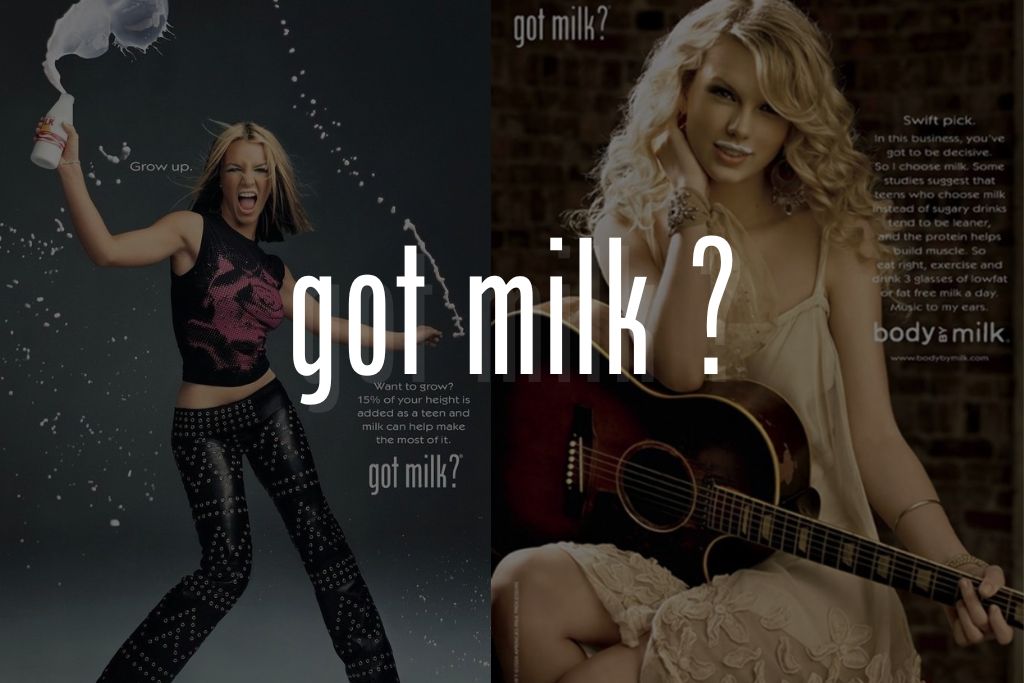
Full-page ads with celebrities sporting milk mustaches appeared in high-profile publications like Time, People, and Sports Illustrated.
Celebrity Endorsements & Pop Culture Figures
From Britney Spears to Michael Jordan, A-list stars lent their image to milk — making it aspirational and culturally relevant.
Why it worked:
-
Leveraged the authority of well-known personalities
-
Broadened appeal across demographics
-
Generated media coverage beyond paid placements
Outdoor Advertising & High-Visibility Placements
Billboards in busy urban areas kept the slogan top-of-mind.
Product Placement & Licensing
Strategic collaborations with brands like Nabisco (Oreo) and Mattel tied milk consumption to beloved products and childhood nostalgia.
Early Adoption of Digital Channels
As the internet gained traction, This campaign expanded into early digital and social media campaigns, adapting its core message for new platforms.
Creativity and Humor: Making Milk Cool
The campaign didn’t lecture consumers about health benefits. Instead, it used humor and everyday scenarios to create emotional connections.
-
Ads often used irony: a desperate search for milk after pouring cereal.
-
Humor made the message shareable, even in pre-social media days.
-
It positioned it as part of joyful, relatable moments.
This approach helped milk break free from its “boring beverage” image and enter viral marketing campaign territory.
Measurable Results: The ROI of Simplicity
The campaign’s success wasn’t just cultural — it delivered real, measurable outcomes.
-
7.7% increase in sales in California in the first year alone.
-
National adoption of the slogan by milk processors across the U.S.
-
Over 70 celebrities featured in ads, driving massive brand visibility.
-
“Got Milk?” became one of the most recognized slogans in U.S. advertising history, cited in pop culture, comedy sketches, and merchandise.
Marketing ROI takeaway: A clear, consistent message amplified across multiple channels can deliver both short-term sales and long-term brand equity.
Applications for Agencies: Actionable Lessons from Got Milk?
A full-service digital marketing agency can take several lessons from this campaign:
1. Leverage Emotional Triggers
Don’t just sell the product — sell the pain of not having it. This scarcity-driven messaging creates urgency.
2. Visual Branding Matters
A simple, distinctive image (like the milk mustache) creates instant recognition across all media.
3. Celebrity & Influencer Power
Well-chosen influencers can amplify credibility and reach, especially when they authentically connect to the product.
4. Multi-Platform Storytelling
Consistency across TV, print, outdoor, and digital ensures that the message saturates the market.
5. Content Repurposing
A single creative concept can live across ads, merchandise, events, and digital campaigns — maximizing ROI.
Modern Take & Digital Transformation
If the campaign were launched today, its strategies would look different but maintain the same core principles.
1. Social Media-First Content
-
TikTok challenges showcasing “milk moments”
-
Instagram filters adding a virtual milk mustache
-
Meme-based content for shareability
2. Influencer Collaborations
Partnering with health, lifestyle, and food influencers to create authentic endorsements.
3. Interactive Campaigns
Gamified experiences — “spot the milk” AR hunts in grocery stores.
4. Cross-Platform Content Marketing
From YouTube mini-documentaries to Snapchat stories, the message could be tailored for each platform without losing consistency.
Conclusion: The Enduring Relevance of Got Milk?
The campaign case study is more than a nostalgic look at a famous advertising campaign — it’s a blueprint for timeless marketing.
Its genius lay in simplicity, emotional connection, and a cross-channel marketing approach that left no audience untouched.
For agencies and brands today, the lessons are clear:
-
Speak to human emotions.
-
Be consistent in branding.
-
Use every channel strategically.
-
Make your message culturally relevant.
If your brand is ready to create the next iconic campaign, our full-service digital marketing agency can help you craft strategies that resonate, engage, and convert — just like “Got Milk?” did for an entire generation.