
Headless CMS & API-First Development: Scaling Content Delivery in the Multi-Platform Era
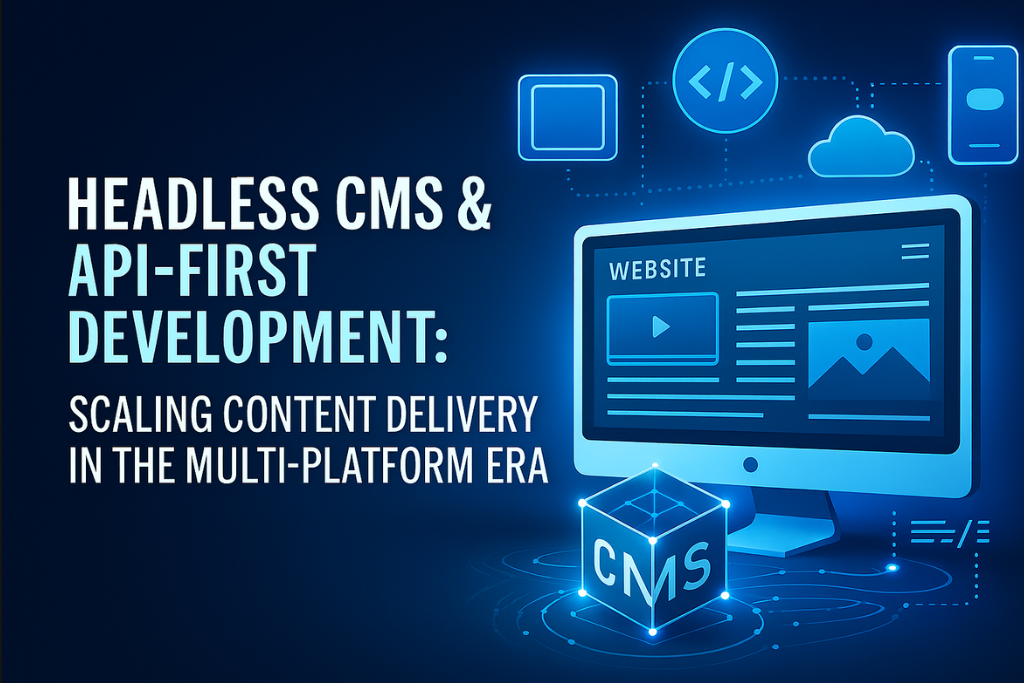
The way businesses create, manage, and distribute content is undergoing a dramatic transformation. Traditional content management systems (CMS) that tightly couple content with presentation are struggling to keep up with today’s digital-first landscape. With the rise of mobile apps, smart devices, AR/VR, and AI-driven platforms, a headless CMS development approach paired with API-first development has emerged as a game-changer.
In this article, we’ll explore what headless CMS and API-first mean, how they are shaping the future of content delivery, and practical strategies for scaling content in a multi-platform era.
What is Headless CMS Development?
At its core, a headless CMS separates the backend (content repository) from the frontend (presentation layer). Unlike traditional CMS platforms like WordPress or Drupal, where content and design are tightly linked, a headless CMS delivers content via APIs to any platform or device.
Key Benefits of Headless CMS Development
-
Omnichannel Content Delivery: Publish once and distribute to websites, mobile apps, IoT, smartwatches, or AR/VR devices.
-
Scalability: Handle content growth and multiple integrations without performance bottlenecks.
-
Developer Flexibility: Use modern frameworks like React, Vue, or Angular without being tied to CMS themes.
-
Future-Proofing: As new platforms emerge, the API-first architecture ensures adaptability.
API-First Development Explained
API-first development is an approach where APIs are designed and built before other components. This ensures consistency, scalability, and seamless integration across systems.
When paired with headless CMS development, API-first ensures content is universally accessible. For example:
-
A single API call can deliver product details to a website, mobile app, or digital kiosk.
-
Updates made in the CMS automatically reflect across all connected channels.
Headless CMS Development vs Traditional CMS
| Feature | Traditional CMS | Headless CMS Development |
|---|---|---|
| Content + Design | Tightly coupled | Decoupled via APIs |
| Multi-Platform Delivery | Limited | Seamless across devices |
| Flexibility | Theme-restricted | Framework-agnostic |
| Speed | Slower scaling | Faster & scalable |
Why Businesses Are Moving to Headless CMS Development
-
Multi-Platform Era
Users consume content through mobile, wearables, AI assistants, and smart devices. Headless CMS ensures consistent delivery across all these touchpoints. -
Performance Optimization
API-first delivery reduces latency and improves page load speed, directly impacting SEO rankings and user experience. -
Personalization at Scale
With APIs, businesses can integrate AI-driven personalization engines to deliver tailored experiences to every user. -
Security Advantages
Decoupling reduces vulnerabilities common in monolithic CMS platforms. APIs can be secured independently.
Headless CMS Development for SEO
SEO often raises concerns when adopting headless CMS. But with proper strategies, you can optimize effectively:
-
Dynamic Rendering: Use server-side rendering (SSR) or static site generation (SSG) to ensure search engines crawl content.
-
Structured Data: Implement schema markup via APIs for rich snippets.
-
Performance: Faster load speeds from headless CMS directly improve Google Core Web Vitals.
-
Consistent Metadata: Ensure API responses include SEO metadata like titles, descriptions, and canonical tags.
Scaling Content Delivery in the Multi-Platform Era
1. Centralized Content Hub
Use the headless CMS as a single source of truth. All platforms pull from this repository, ensuring consistency.
2. API-Driven Integrations
Connect CRM, eCommerce platforms, marketing automation, and analytics tools seamlessly.
3. Global Expansion
APIs allow easy integration of localization and translation tools for multilingual content delivery.
4. AI-Powered Distribution
AI algorithms can analyze user behavior and automatically push content to the right channel at the right time.
Popular Headless CMS Platforms
Some leading platforms dominating the market include:
-
Contentful
-
Strapi
-
Sanity
-
Prismic
-
Kentico Kontent
These platforms are API-first, developer-friendly, and designed for enterprise-level scaling.
Challenges of Headless CMS Development
While powerful, headless CMS development isn’t without hurdles:
-
Learning Curve: Requires technical expertise compared to traditional CMS.
-
Content Previewing Issues: Previewing multi-platform content can be complex.
-
Initial Setup Costs: API-driven systems may require higher upfront investment.
Best Practices for Headless CMS & API-First Development
-
Define Content Models Early – Structure your content types for flexibility.
-
Prioritize Security – Secure APIs with authentication and encryption.
-
Optimize APIs – Ensure APIs are lightweight for faster response times.
-
Leverage CDNs – Use content delivery networks for global scalability.
-
Use Microservices Architecture – Break down systems into independent services for easier scaling.
Future of Headless CMS Development
By 2025 and beyond, headless CMS development will continue to dominate digital ecosystems:
-
AI Integration for content personalization and predictive publishing.
-
Voice & Visual Search compatibility through API-driven metadata.
-
AR/VR Content Delivery for immersive user experiences.
-
Composable Architecture for building flexible, scalable, and future-ready digital ecosystems.
FAQs on Headless CMS Development
Q1. What is the main advantage of headless CMS over traditional CMS?
Headless CMS separates content from presentation, allowing omnichannel delivery via APIs.
Q2. Is headless CMS good for SEO?
Yes. With SSR/SSG, structured data, and performance optimization, SEO can thrive on headless platforms.
Q3. Which companies should adopt headless CMS development?
Enterprises with multi-platform presence, eCommerce businesses, and global brands benefit the most.
Q4. Can non-technical teams use headless CMS?
Yes, most headless CMS platforms provide user-friendly dashboards for content creators.
Q5. How does API-first development support scaling?
APIs enable seamless integration and distribution across unlimited platforms without duplicating efforts.
In today’s multi-platform era, headless CMS development combined with API-first development is no longer optional—it’s essential for brands aiming to scale. By decoupling content from presentation and leveraging APIs for delivery, businesses can future-proof their digital presence, improve SEO, and deliver consistent user experiences across every channel.
As digital ecosystems evolve, embracing this approach will help enterprises remain competitive, agile, and prepared for the next wave of technological innovation.