
How to Reduce Cost Per Lead in Chandigarh Digital Campaigns
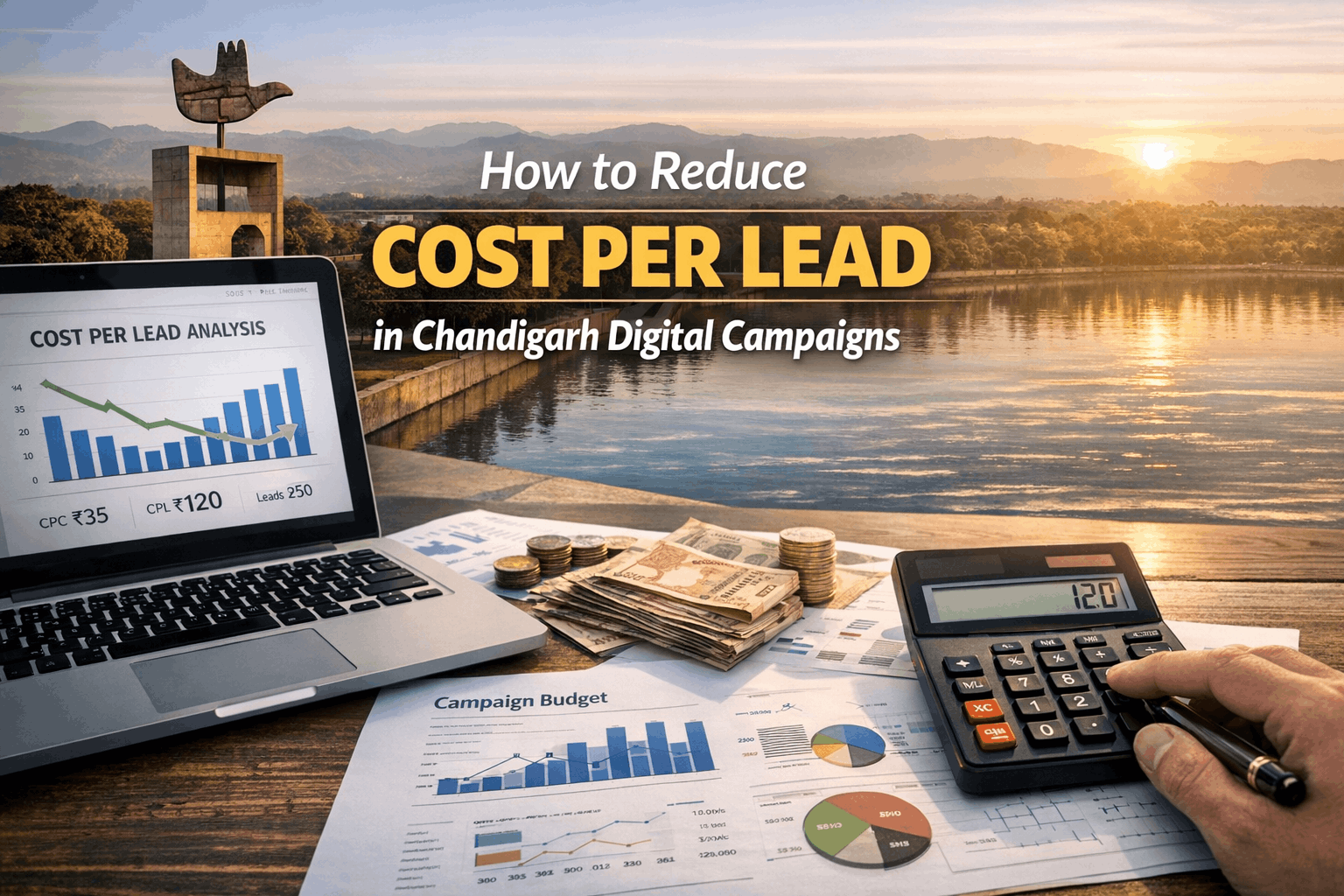
In a competitive digital ecosystem like Chandigarh and the broader Tricity region, businesses are increasingly relying on performance marketing and paid ads to drive measurable growth. However, rising advertising costs and evolving consumer behavior have made one metric critically important: cost per lead (CPL).
Understanding how to reduce cost without compromising lead quality is no longer just a marketing goal—it’s a business necessity. Whether you’re a real estate firm in Mohali, a SaaS startup in Panchkula, or a service provider targeting global markets from India, optimizing CPL directly impacts profitability and scalability.
This guide provides a comprehensive, strategy-driven approach to reducing CPL in Chandigarh digital campaigns while aligning with modern SEO, AEO, and GEO frameworks.
Understanding Cost Per Lead in Chandigarh’s Performance Marketing Ecosystem
What is Cost Per Lead (CPL)?
Cost per lead refers to the amount spent on acquiring a potential customer through paid ads or performance marketing campaigns. It is calculated as:
CPL = Total Ad Spend / Total Leads Generated
Lowering CPL means generating more leads for the same or lower budget, improving campaign efficiency.
Why CPL is Rising in Chandigarh and Tricity
Several factors contribute to increasing CPL in local markets like Chandigarh, Mohali, Panchkula, and Zirakpur:
- Increased competition in digital advertising
- Rising CPC (Cost Per Click) on platforms like Google Ads and Meta
- Poor audience targeting strategies
- Inefficient landing pages
- Lack of conversion tracking and data insights
How to Reduce Cost Per Lead Using Data-Driven Performance Marketing
1. Optimize Audience Targeting for Paid Ads
One of the most effective ways to reduce CPL is by refining your audience targeting.
Best Practices:
- Use geo-targeting for Chandigarh, Mohali, Panchkula, and Zirakpur
- Segment audiences based on:
- Demographics (age, income, profession)
- Interests and behaviors
- Search intent
- Leverage lookalike audiences for scaling campaigns
Key Insight:
Broad targeting increases reach but reduces efficiency. Precision targeting improves lead quality and lowers cost per lead.
2. Improve Ad Creatives and Messaging
Ad fatigue and irrelevant messaging can significantly increase CPL.
Strategies:
- A/B test multiple ad creatives
- Use localized messaging:
- “Best Digital Services in Chandigarh”
- “Affordable Solutions in Tricity”
- Highlight clear value propositions
- Use strong CTAs (Call-to-Actions)
Example:
Instead of generic ads, tailor creatives to reflect local needs and language nuances.
3. Landing Page Optimization for Higher Conversion Rates
Even the best paid ads fail if the landing page doesn’t convert.
Key Elements of a High-Converting Landing Page:
- Fast loading speed (under 3 seconds)
- Mobile responsiveness
- Clear headline aligned with ad intent
- Minimal form fields
- Trust signals (testimonials, certifications)
Conversion Tip:
Improving conversion rate from 2% to 4% can halve your CPL without increasing ad spend.
4. Use Smart Bidding Strategies in Paid Ads
Platforms like Google Ads offer automated bidding strategies that optimize for conversions.
Recommended Strategies:
- Target CPA (Cost Per Acquisition)
- Maximize Conversions
- Enhanced CPC
When to Use:
- When you have sufficient historical data
- When campaigns are conversion-focused
5. Leverage Retargeting to Reduce CPL
Retargeting helps re-engage users who have already interacted with your brand.
Benefits:
- Higher conversion rates
- Lower cost per lead
- Better ROI compared to cold audiences
Channels:
- Google Display Network
- Meta (Facebook & Instagram)
- LinkedIn Ads (for B2B)
Practical Framework: Step-by-Step Approach to Reduce Cost Per Lead
Step 1: Audit Existing Campaigns
- Analyze CPL across channels
- Identify high-cost segments
- Evaluate conversion rates
Step 2: Refine Targeting
- Exclude irrelevant audiences
- Focus on high-intent users
Step 3: Optimize Creatives
- Test multiple formats (video, carousel, static)
- Localize messaging for Chandigarh market
Step 4: Improve Landing Pages
- Reduce friction
- Enhance UX/UI
- Add trust signals
Step 5: Track and Measure Performance
- Use tools like:
- Google Analytics
- Google Tag Manager
- CRM integrations
Common Challenges in Reducing CPL (and How to Overcome Them)
Challenge 1: High Competition in Paid Ads
Solution: Focus on niche targeting and long-tail keywords like
“affordable digital marketing services in Chandigarh”
Challenge 2: Low Conversion Rates
Solution: Optimize landing pages and align them with ad intent
Challenge 3: Poor Quality Leads
Solution: Use qualification filters in forms and better audience segmentation
Challenge 4: Limited Budget
Solution: Prioritize high-performing channels and eliminate wasteful spend
Location-Based Strategy: Reducing CPL in Chandigarh & Tricity Markets
Chandigarh
- High competition but premium audience
- Focus on quality leads over volume
Mohali
- Growing startup ecosystem
- Ideal for B2B and SaaS campaigns
Panchkula
- Service-based businesses dominate
- Local SEO + paid ads work well
Zirakpur
- Real estate and local services
- Geo-targeted ads are highly effective
India & Global Markets
Businesses in Tricity often target global clients. In such cases:
- Use multi-location targeting
- Optimize campaigns for different time zones
- Create region-specific landing pages
Future Trends in Performance Marketing and CPL Optimization
1. AI-Driven Campaign Optimization
AI tools are improving targeting, bidding, and creative performance.
2. First-Party Data Strategies
With privacy changes, businesses must rely on their own data for targeting.
3. Voice Search & AEO Optimization
Optimizing for conversational queries like:
- “How to reduce cost per lead in Chandigarh?”
- “Best way to lower CPL in paid ads?”
4. Omnichannel Marketing
Combining SEO, paid ads, social media, and email marketing improves efficiency and reduces CPL.
Frequently Asked Questions (FAQs)
1. What is a good cost per lead in Chandigarh?
A good CPL depends on the industry, but generally ranges between ₹200 to ₹2,000. High-ticket industries may have higher CPLs but better ROI.
2. How can I reduce cost per lead in paid ads quickly?
- Improve targeting
- Optimize landing pages
- Use retargeting campaigns
- Test multiple ad creatives
3. Why is my cost per lead increasing?
Common reasons include:
- Increased competition
- Poor targeting
- Low conversion rates
- Ineffective ad creatives
4. Which platform is best for reducing CPL?
It depends on your business:
- Google Ads: High intent leads
- Facebook/Instagram: Cost-effective for B2C
- LinkedIn: Best for B2B
5. How important is landing page optimization in reducing CPL?
Extremely important. A well-optimized landing page can significantly reduce CPL by improving conversion rates.
6. Can SEO help reduce cost per lead?
Yes. SEO generates organic traffic, reducing reliance on paid ads and lowering overall acquisition costs.
https://support.google.com/google-ads/answer/14074
Building Sustainable, Cost-Efficient Lead Generation Systems
Reducing cost per lead is not about cutting budgets—it’s about improving efficiency across every stage of the marketing funnel. From smarter audience targeting and optimized paid ads to high-converting landing pages and data-driven decision-making, every element plays a role.
In dynamic markets like Chandigarh and the Tricity region, businesses that adopt structured performance marketing strategies and continuously optimize their campaigns are better positioned to scale sustainably.
By focusing on long-term optimization rather than short-term gains, organizations can achieve lower CPL, higher ROI, and stronger digital growth—both locally and globally.