
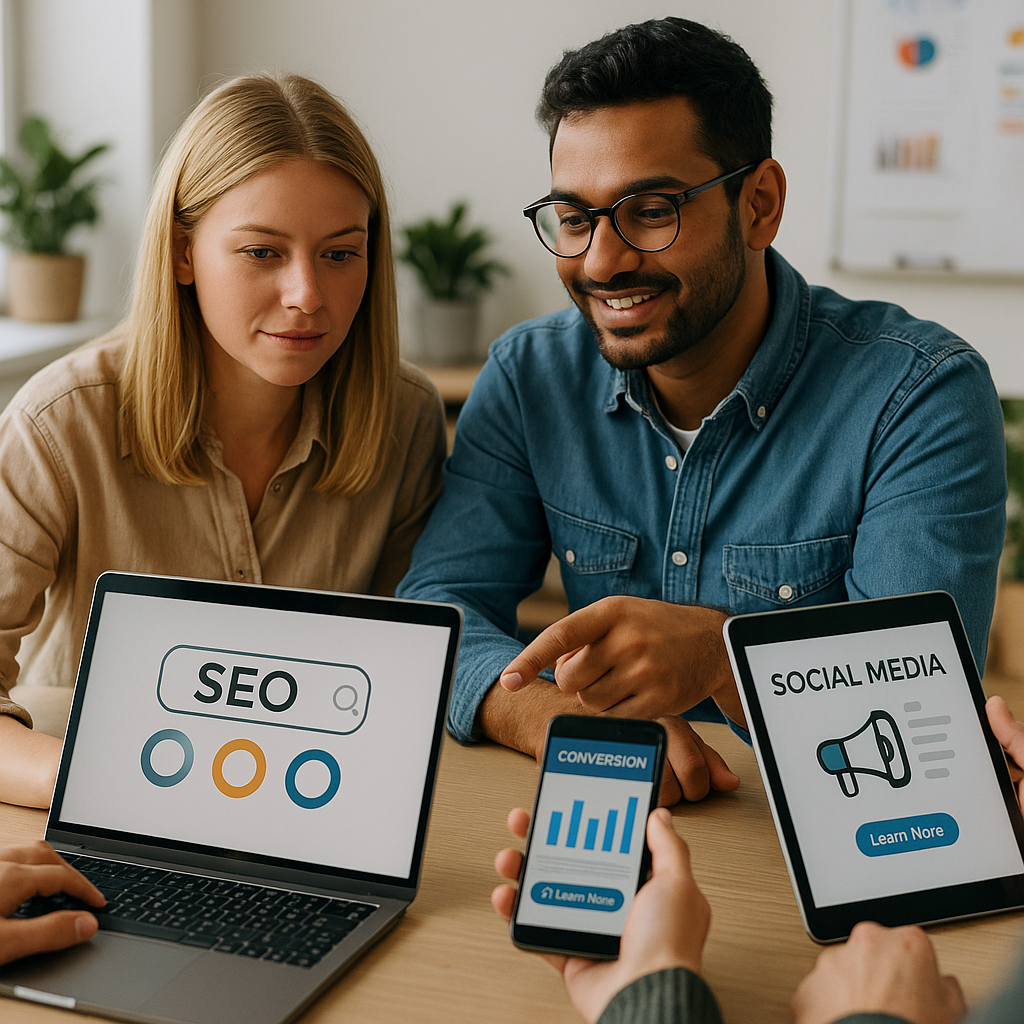
The Tricity buyer journey rarely fits a single campaign channel
- Why Tricity Buyers Rarely Stick to Just One Channel
- Quick Answer
- What Makes the Tricity Buyer Journey So Complicated?
- The Local Mix: Digital Meets Offline
- Multi-Device, Multi-Platform Habits
- Family and Peer Influence
- Why One Channel Alone Fails
- The Real Impact of Multi-Channel Marketing in Tricity
- What Is Multi-Channel Marketing?
- How Multi-Channel Drives Real Results
- The Problem with Channel Silos
- Attribution: The Toughest Nut to Crack
- Mapping the Tricity Buyer Journey: Real Examples
- Example 1: Coaching Institute Admissions
- Example 2: Home Appliance Purchase
- Example 3: Restaurant Launch
- Key Takeaway
- Common Mistakes Businesses Make with Tricity Digital Marketing
- Over-Reliance on a Single Channel
- Neglecting Local Nuances
- Poor Tracking and Attribution
- Inconsistent Messaging Across Channels
- Not Retargeting Across Platforms
- Ignoring Offline Integration
- Best Practices for Multi-Channel Marketing in Tricity
- Build an Integrated Channel Plan
- Create Consistent, Localised Messaging
- Track Multi-Channel Conversion Paths
- Retarget and Nurture Across Platforms
- Involve Offline Touchpoints
- Test and Refine Regularly
- How to Map and Optimise Conversion Paths in Tricity
- What Is a Conversion Path?
- Steps to Map a Conversion Path
- Tools for Mapping Conversion Paths
- Real Example: Mapping for a Local Boutique
- Why Mapping Matters
- Trends and Future Outlook for Tricity Digital Marketing
- Rise of Hyper-Local Targeting
- Growth of Video and Influencer Content
- Chat and Messaging Commerce
- Smarter Attribution and Automation
- Offline-Online Integration
- Privacy and Data Changes
- Frequently Asked Questions
- What is the buyer journey in Tricity digital marketing?
- Why is a single campaign channel not enough for Tricity customers?
- How can businesses track multi-channel conversion paths?
- What are the most effective channels for Tricity digital marketing?
- How does WhatsApp marketing help in Tricity?
- What are common mistakes in Tricity digital marketing?
- How do you integrate offline touchpoints with digital campaigns?
- What is multi-channel marketing?
- How do you measure the effectiveness of multi-channel campaigns?
- Which tools help with Tricity digital marketing attribution?
- Why do Tricity customers rely on both online and offline channels?
- How can small businesses manage multi-channel marketing?
- What are the latest trends in Tricity digital marketing?
- How does influencer marketing work in Tricity?
- How often should businesses review their conversion paths?
- Key Takeaways
- Conclusion
Why Tricity Buyers Rarely Stick to Just One Channel
Last week, a friend in Mohali wanted to buy a new AC. She started with a Google search, checked reviews on Facebook, called two shops in Chandigarh, and finally bought from a Panchkula brand she found on Instagram. Sound familiar? This is the real buyer journey for most Tricity customers. It’s never a straight line, nor does it fit into any single campaign channel. For anyone serious about Tricity digital marketing, this messy, unpredictable path is both a headache and a goldmine.
The old days of running one SEO campaign or pouring money into Facebook ads and hoping for a flood of leads are long gone. People bounce between Instagram reels, Google listings, WhatsApp groups, and even offline events before making a choice. If you ignore this, you’ll waste budget, miss out on conversions, or just keep wondering why your leads vanish after the first click.
Tricity – covering Chandigarh, Mohali, and Panchkula – has a unique customer base. The audience is digitally savvy, but local habits, word-of-mouth, and community events still count. That means no single channel can cover the whole buyer journey. Understanding this is the first step to smarter, more effective Tricity digital marketing.
Quick Answer
Most Tricity customers use multiple channels – Google, social media, WhatsApp, events – before buying. Relying on just one campaign misses key touchpoints and risks losing conversions. Multi-channel marketing is essential for Tricity digital marketing success.
What Makes the Tricity Buyer Journey So Complicated?
Tricity buyers rarely move in a straight line from ad to purchase. Instead, they hop between digital and offline touchpoints, influenced by family, peers, and local trends. This creates a zigzag path that’s hard to predict or measure.
The Local Mix: Digital Meets Offline
Unlike in larger metros, Tricity customers often combine internet research with offline activities:
- Searching for businesses on Google Maps, then calling before visiting in person
- Watching Instagram stories but confirming details via WhatsApp
- Trusting local Facebook groups as much as official brand pages
- Checking online reviews yet still asking neighbours for their opinion
This blend of digital and real-world steps makes single-channel campaigns feel incomplete.
Multi-Device, Multi-Platform Habits
Most Tricity shoppers use several devices:
- Starting research on a mobile phone during their commute
- Comparing products on a laptop at home
- Saving screenshots to share in family WhatsApp groups
Switching devices means you can’t rely on tracking cookies alone. Attribution gets messy, and so does your reporting if you’re not prepared.
Family and Peer Influence
Even the most digital-savvy buyers still ask around. Parents, spouses, and friends often get involved, especially for big-ticket items like appliances, cars, or even coaching classes. This slows the journey, adds new touchpoints, and often leads buyers back to the start.
Why One Channel Alone Fails
If you only run Facebook ads, you’ll miss those who Google first. If you only invest in SEO, you’ll lose buyers swayed by Instagram influencers or WhatsApp forwards. The buyer journey in Tricity demands a mix – sometimes a chaotic one.
The Real Impact of Multi-Channel Marketing in Tricity
Multi-channel marketing means reaching customers wherever they are – across search, social, paid ads, and even offline. For Tricity, this is not just a trendy tactic. It’s a necessity.
What Is Multi-Channel Marketing?
Multi-channel marketing uses several platforms and methods to engage buyers. In Tricity, this usually covers:
- SEO campaigns targeting local search terms
- Paid media on Google, Facebook, and Instagram
- WhatsApp marketing for direct, personal communication
- Local influencer partnerships and community events
- SMS and email for reminders or follow-ups
How Multi-Channel Drives Real Results
Here’s a simple example: a Chandigarh bakery launches a new cake flavor. Their process might look like this:
- Post teaser reels on Instagram and Facebook.
- Run Google Ads for “best cake in Chandigarh.”
- Send WhatsApp updates to regular customers.
- Host a tasting event promoted in local Facebook groups.
- Collect feedback via Google Forms sent through SMS.
Each channel supports the others. Instagram builds buzz, Google Ads catch new searchers, WhatsApp drives loyalty, and events create word-of-mouth.
The Problem with Channel Silos
If you only focus on one channel, you miss out on synergy. Many businesses in Tricity run SEO campaigns but ignore social touchpoints, or vice versa. The result? Leads leak out of the funnel. You see lots of impressions but few conversions, or you get traffic but no actual visits.
Attribution: The Toughest Nut to Crack
Tracking which channel truly drove the sale is tricky. A customer might first see your Google ad, then follow you on Instagram, and finally buy after a WhatsApp reminder. Standard analytics tools often miss these cross-channel journeys, leaving you with half the picture.
Mapping the Tricity Buyer Journey: Real Examples
Understanding the actual path your customers take is the only way to fix gaps. Here’s how a typical journey might look for different sectors:
Example 1: Coaching Institute Admissions
- Student sees an Instagram reel about a new course.
- Searches “best IELTS coaching in Mohali” on Google.
- Checks reviews on JustDial and Google My Business.
- Joins a webinar promoted in a local Facebook group.
- Shares details with parents on WhatsApp.
- Visits the institute for a demo class.
Each step involves a different channel. Miss one, and you risk losing the student.
Example 2: Home Appliance Purchase
- Google search for “AC dealers in Chandigarh.”
- Visits dealer websites and compares prices.
- Watches YouTube reviews in Hindi and Punjabi.
- Asks for recommendations in a family WhatsApp group.
- Sees a local influencer’s Instagram story about an AC brand.
- Visits the store in person before buying.
Example 3: Restaurant Launch
- Paid ads on Facebook targeting Panchkula residents.
- Instagram stories with launch offers.
- Google My Business listing with updated hours and menu.
- Influencer invites for a food tasting event.
- WhatsApp broadcast to previous customers.
Key Takeaway
No two buyer journeys look the same. The path is rarely linear, and every channel plays a role.
Common Mistakes Businesses Make with Tricity Digital Marketing
Most businesses in Chandigarh, Mohali, and Panchkula fall into similar traps. These mistakes cost time, money, and lost customers.
Over-Reliance on a Single Channel
- Pouring all budget into SEO but ignoring social media
- Focusing only on Instagram influencers, hoping for viral success
- Using WhatsApp for follow-ups but never capturing leads from search
This approach leaves gaps where potential buyers slip away.
Neglecting Local Nuances
Tricity isn’t Mumbai or Bangalore. Local WhatsApp groups, community events, and even cable TV ads still influence buyers. Ignoring these means missing out on a big chunk of your audience.
Poor Tracking and Attribution
Many businesses don’t know which channel actually drove the conversion. They look at last-click data and assume that’s the full story. But in Tricity, the journey is almost always multi-touch.
Inconsistent Messaging Across Channels
Some brands post fancy offers on Instagram but have outdated Google listings. Or they run Google Ads but don’t update their Facebook pages. This confuses buyers and erodes trust.
Not Retargeting Across Platforms
A buyer who clicked your Google ad but didn’t buy might be convinced by a WhatsApp follow-up. If you’re not connecting the dots, you lose out.
Ignoring Offline Integration
Events, in-store visits, and word-of-mouth still matter. Smart businesses connect online campaigns with offline actions – like giving unique codes at events or asking for feedback via SMS.
Best Practices for Multi-Channel Marketing in Tricity
To succeed in Tricity digital marketing, you need a coordinated, channel-aware approach. Here’s how to do it right.
Build an Integrated Channel Plan
Don’t treat each platform as a silo. Map out how your channels support each other:
- Use SEO campaigns to capture those actively searching.
- Run paid media for quick reach and targeted offers.
- Keep social touchpoints alive with regular, local content.
- Use WhatsApp and SMS for reminders and loyalty.
- Tie in offline events or pop-ups with digital promotions.
Create Consistent, Localised Messaging
Make sure your branding, offers, and details match across all platforms. Use local language and references when possible. For example, a Panchkula gym might highlight “near Bus Stand” on Google and “close to Sector 20 market” on Instagram.
Track Multi-Channel Conversion Paths
Set up tracking to see where leads come from. Use tools like:
- Google Analytics with UTM parameters
- Facebook and Instagram pixel tracking
- WhatsApp Business analytics
- CRM tools to track offline visits and calls
Don’t just rely on last-click attribution. Look for patterns in how channels work together.
Retarget and Nurture Across Platforms
A buyer who visits your site from Google can be retargeted on Facebook or WhatsApp. Use email, SMS, or even push notifications for follow-ups. Keep the conversation going.
Involve Offline Touchpoints
Connect your online campaigns with real-world actions:
- Offer exclusive codes at events, redeemable online
- Ask for feedback via SMS after an in-store visit
- Promote offline events through digital channels
Test and Refine Regularly
Don’t assume what works in Delhi will work in Chandigarh. Test different messages, offers, and platforms. Watch your data and adjust quickly.
How to Map and Optimise Conversion Paths in Tricity
Mapping the true conversion path means understanding every step your buyer takes, from first touch to final purchase.
What Is a Conversion Path?
A conversion path is the sequence of touchpoints (ads, posts, searches, messages) a customer interacts with before buying. In Tricity, these paths are rarely the same for two buyers.
Steps to Map a Conversion Path
- Identify All Touchpoints: List every place a customer can interact with your business – Google, Facebook, WhatsApp, events, calls, etc.
- Track Engagement: Use analytics and manual tracking to see which touchpoints get the most action.
- Survey Your Buyers: Ask recent customers how they found you and what steps they took.
- Visualise the Journey: Create a simple flowchart or table showing common paths.
- Spot Drop-Off Points: Find where buyers lose interest or leave.
- Optimise Weak Spots: Improve messaging, offers, or follow-ups where you see drop-offs.
Tools for Mapping Conversion Paths
- Google Analytics (with multi-channel funnels)
- Facebook Attribution tools
- CRM software with lead source tracking
- WhatsApp Business analytics
Real Example: Mapping for a Local Boutique
A Chandigarh boutique mapped its conversion path and found:
- 40% of buyers started with Instagram
- 30% came from Google searches
- 20% heard about the store from friends (offline)
- 10% responded to WhatsApp broadcasts
They also noticed most Instagram leads needed a WhatsApp follow-up before visiting. By improving their WhatsApp response time and sending personalised offers, they increased in-store visits by 18% in three months.
Why Mapping Matters
If you don’t know the conversion path, you’ll waste money on low-impact channels and miss easy wins. Honest tracking and regular reviews are the only way to keep improving.
Trends and Future Outlook for Tricity Digital Marketing
Digital marketing in Tricity is changing fast. What worked two years ago may not work now. Staying ahead means watching trends and being ready to adapt.
Rise of Hyper-Local Targeting
Brands are getting more specific – targeting sectors, neighbourhoods, or even apartment complexes. WhatsApp groups for local societies now matter as much as city-wide campaigns.
Growth of Video and Influencer Content
Short videos and influencer shoutouts have exploded, especially on Instagram and YouTube. Local influencers with just 5,000 – 10,000 followers can drive real footfall for Tricity businesses.
Chat and Messaging Commerce
WhatsApp is not just for reminders now. Businesses are using it for:
- Sharing catalogues
- Taking orders
- Handling customer support
- Sending payment links
Smarter Attribution and Automation
Tools like Google Analytics 4 and advanced CRM systems can now track more complex journeys. Automated follow-ups via SMS, email, or WhatsApp are becoming standard.
Offline-Online Integration
The best results come from blending digital campaigns with real-world experiences. For example, hosting a live cooking demo and streaming it on Facebook, or offering QR codes at events for instant WhatsApp chats.
Privacy and Data Changes
With new privacy laws and changes to cookie tracking, businesses need to rely more on first-party data – like WhatsApp opt-ins or email lists – rather than just ad platforms.
Frequently Asked Questions
What is the buyer journey in Tricity digital marketing?
The buyer journey in Tricity digital marketing is the process customers follow from first awareness of a product or service to final purchase. It often includes multiple online and offline touchpoints, such as Google searches, social media, WhatsApp, and in-person visits.
Why is a single campaign channel not enough for Tricity customers?
Tricity customers interact with brands across several platforms before buying. Relying on just one channel misses key touchpoints, which reduces conversions and wastes marketing budget.
How can businesses track multi-channel conversion paths?
Businesses can track multi-channel conversion paths by using tools like Google Analytics, Facebook Pixel, WhatsApp Business analytics, and CRM software. Surveys and customer interviews also help map the real journey.
What are the most effective channels for Tricity digital marketing?
The most effective channels for Tricity digital marketing include:
– SEO campaigns for local search visibility
– Paid media (Google and social ads)
– Instagram and Facebook for engagement
– WhatsApp for direct communication
– Offline events and word-of-mouth
How does WhatsApp marketing help in Tricity?
WhatsApp marketing allows businesses to send offers, updates, and reminders directly to customers. It’s especially effective for quick responses and building loyalty in local markets like Tricity.
What are common mistakes in Tricity digital marketing?
Common mistakes include relying only on one channel, ignoring local habits, poor tracking, inconsistent messaging, and not connecting online campaigns to offline actions.
How do you integrate offline touchpoints with digital campaigns?
Integrate offline touchpoints by:
1. Promoting events online and capturing leads at the venue
2. Using unique codes for in-store offers
3. Collecting feedback via SMS after offline interactions
What is multi-channel marketing?
Multi-channel marketing is the practice of engaging potential customers across multiple platforms, such as search engines, social media, messaging apps, and offline events, to increase reach and conversions.
How do you measure the effectiveness of multi-channel campaigns?
Measure effectiveness by tracking:
– Lead sources and conversion rates
– Engagement on each channel
– Customer feedback
– Sales data compared to previous single-channel efforts
Which tools help with Tricity digital marketing attribution?
Useful tools include Google Analytics (with UTM tracking), Facebook Attribution, WhatsApp Business analytics, and CRM systems that log every customer touchpoint.
Why do Tricity customers rely on both online and offline channels?
Tricity customers value digital research but also trust recommendations from friends and in-person experiences. This hybrid approach makes single-channel campaigns less effective.
How can small businesses manage multi-channel marketing?
Small businesses can start by focusing on 2 – 3 core channels, ensuring consistent messaging, and using simple analytics tools to track results. WhatsApp and Instagram are good starting points for local engagement.
What are the latest trends in Tricity digital marketing?
Latest trends include hyper-local targeting, short-form video content, WhatsApp commerce, and blending online campaigns with offline events for maximum impact.
How does influencer marketing work in Tricity?
Influencer marketing in Tricity involves partnering with local personalities on Instagram or YouTube to promote products. These influencers often have strong local followings and can drive real traffic and sales.
How often should businesses review their conversion paths?
Businesses should review their conversion paths at least quarterly, or whenever launching a new campaign. Regular reviews help spot gaps and optimise for better results.
Key Takeaways
- Tricity buyers use multiple channels before purchasing.
- Relying on a single campaign channel misses key touchpoints.
- Multi-channel marketing combines SEO, paid media, social, messaging, and offline tactics.
- WhatsApp, Instagram, and Google are top platforms for local buyers.
- Offline events and word-of-mouth still influence Tricity decisions.
- Tracking conversion paths needs both analytics tools and customer feedback.
- Consistent, localised messaging builds trust across channels.
- Retargeting and nurturing leads across platforms increases conversions.
- Hyper-local targeting and influencer marketing are growing trends.
- Regular reviews of your buyer journey prevent wasted budget and lost leads.
Conclusion
Tricity digital marketing is never as simple as launching a single SEO campaign or boosting a post on Facebook. Local buyers expect to see you everywhere – on Google, Instagram, WhatsApp, and even at their neighbourhood events. If you want real, lasting results, you have to meet them on every step of their journey.
Trying to fit Tricity customers into a one-channel box is a recipe for disappointment. The smartest brands map their buyers’ paths, test new touchpoints, and keep refining their approach. Honestly, you’ll never control every step, but you can make sure you’re present where it matters most.