
Visual Search & Image SEO: Leveraging Google Lens, AI-powered Tools & Alt-Text Best Practices
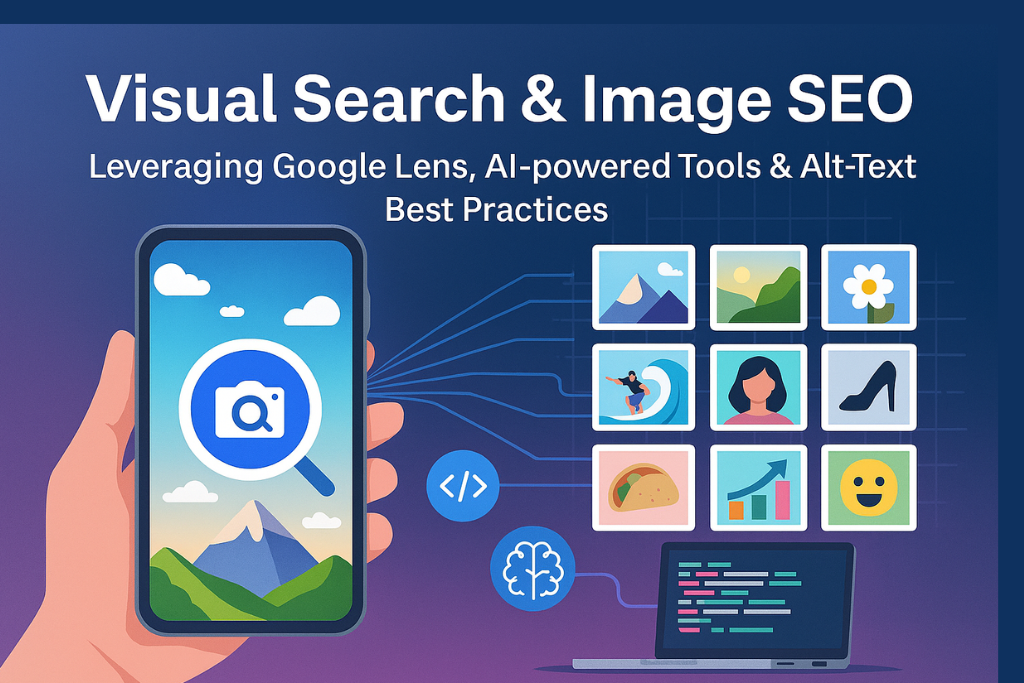
Search behavior is evolving rapidly. Beyond text and voice queries, Visual Search & Image SEO has emerged as a powerful way users interact with search engines. Instead of typing, people are now snapping images, scanning barcodes, and uploading visuals to platforms like Google Lens, Pinterest Lens, and Bing Visual Search to find relevant results.
For businesses, optimizing for visual search is no longer optional. With AI-powered tools, alt-text best practices, and structured image optimization strategies, websites can dominate SERPs (Search Engine Results Pages) and position themselves for zero-click and image-based queries.
This article explores everything you need to know about visual search SEO, including Google Lens optimization, AI-driven tools, structured data, and practical best practices.
What is Visual Search SEO?
Visual search SEO refers to optimizing website images and visual content so they are easily discoverable and indexable by search engines. Unlike traditional SEO, which focuses on keywords, visual search relies on image recognition technology powered by AI and machine learning.
Examples of Visual Search:
-
A user snaps a photo of a handbag → Google Lens finds similar products online.
-
A traveler uploads an image of a landmark → search engines provide historical info, travel guides, and nearby attractions.
-
A shopper scans a barcode → gets instant purchase options.
By preparing your content for these search habits, you align with how modern consumers find and buy products.
Why Visual Search Matters for SEO
-
Exploding User Adoption
-
According to Google, over 8 billion visual searches occur monthly via Google Lens.
-
Pinterest Lens processes more than 600 million visual searches every month.
-
-
E-commerce Growth
Visual search accelerates product discovery. Shoppers prefer snapping an image over typing long product descriptions. -
AI-Powered Personalization
AI tools improve recognition accuracy, ensuring users get personalized, context-aware results. -
Competitive Advantage
Most businesses are still focused only on text-based SEO. Early adopters of visual search SEO gain a clear competitive edge.
Google Lens and Its Impact on Visual Search SEO
What is Google Lens?
Google Lens is an AI-powered image recognition tool that allows users to search the web using pictures instead of words. It integrates with Android devices, Google Photos, Chrome, and even real-time camera searches.
How Google Lens Works for SEO:
-
Product Identification: Lens scans an item and suggests purchase links.
-
Local SEO: A user points the camera at a storefront, and Google shows business details.
-
Travel & Learning: Identifies plants, animals, or landmarks with direct info links.
Optimizing for Google Lens:
-
Use high-quality images with clean backgrounds.
-
Add keyword-rich alt text for every image.
-
Use structured data markup (Product schema, ImageObject schema).
-
Ensure image sitemaps are submitted to Google Search Console.
-
Leverage descriptive file names (e.g., red-leather-handbag.jpg instead of IMG1234.jpg).
AI-Powered Tools in Visual Search SEO
AI is revolutionizing how search engines interpret visuals. Businesses must adopt AI-driven tools to remain competitive.
Top AI Tools for Image SEO:
-
Google Vision AI: Helps detect objects, landmarks, logos, and text in images.
-
Clarifai: AI platform for advanced image and video recognition.
-
Amazon Rekognition: Used for e-commerce product tagging and content moderation.
-
Canva AI & Adobe Firefly: Tools for generating SEO-friendly custom visuals.
Benefits of AI in Visual Search SEO:
-
Automated Image Tagging: Reduces manual work by generating keyword-rich tags.
-
Improved Content Categorization: Helps align with search intent.
-
Personalized Search Results: Provides context-aware image suggestions.
Alt-Text Best Practices for Image SEO
Alt-text (alternative text) is crucial for visual search SEO because it helps search engines understand images. It also enhances website accessibility.
Writing SEO-Friendly Alt-Text:
-
Be descriptive & concise: Instead of “bag,” write “red leather handbag with gold chain strap.”
-
Use focus keywords naturally: Include Visual Search SEO where appropriate.
-
Avoid keyword stuffing: Keep it natural and readable.
-
Include context: If the image shows a product in use, describe the action.
-
Stay under 125 characters: To ensure readability by screen readers.
✅ Example of Good Alt-Text:
“Google Lens visual search identifying red leather handbag for online shopping.”
Structured Data for Visual Search SEO
Structured data helps search engines understand images in context.
Key Schema Markups:
-
ImageObject: Defines metadata like caption, URL, thumbnail.
-
Product Schema: Adds price, availability, and ratings for product images.
-
Recipe Schema: Enhances food images with cooking instructions and reviews.
-
LocalBusiness Schema: Optimizes storefront images for local SEO.
Using schema markup ensures your images can appear in rich results and Google Discover.
Best Practices to Dominate Visual Search SEO
1. Optimize Image Size & Format
-
Use WebP or AVIF formats for speed.
-
Compress images without losing quality.
2. Use Descriptive File Names
-
Rename images with keywords: “google-lens-seo-optimization.jpg.”
3. Submit an Image Sitemap
-
Helps Google crawl all images on your website.
4. Mobile Optimization
-
Ensure images load fast on mobile devices (where most visual searches happen).
5. Contextual Placement
-
Place images near relevant text content.
6. Leverage Video & Visual Content
-
Google also indexes video thumbnails for visual queries.
7. Build Backlinks with Images
-
Infographics and unique visuals attract natural backlinks.
Visual Search SEO and E-commerce
For e-commerce websites, visual search SEO is a game changer.
-
Product Images: Multiple angles, lifestyle images, zoom-in options.
-
AR Integration: Virtual try-on with AI tools like Google ARCore.
-
Shoppable Images: Tag products in images for direct checkout.
-
User-Generated Content (UGC): Encourage customers to share product photos.
This improves ranking in both Google Images and visual search results.
Common Mistakes to Avoid in Image SEO
-
Using stock photos without customization.
-
Uploading heavy, uncompressed images.
-
Forgetting alt-text or using generic text like “image123.”
-
Ignoring structured data markup.
-
Neglecting accessibility and screen-reader guidelines.
Future of Visual Search SEO
The future is AI-first and image-driven. With the rise of Google Lens, AR shopping, and multimodal search (text + image queries), businesses must prioritize visual search SEO today to remain competitive tomorrow.
FAQs on Visual Search & Image SEO
Q1. What is Visual Search SEO?
It’s the process of optimizing images and visuals for search engines, ensuring they rank in visual and SERP results.
Q2. How does Google Lens affect SEO?
Google Lens uses AI to identify objects, products, and places, connecting users directly to optimized websites.
Q3. What is the role of alt-text in image SEO?
Alt-text describes an image for search engines and improves accessibility, making it crucial for rankings.
Q4. Do structured data and schema improve image SEO?
Yes. Schema markup helps search engines contextualize images, boosting visibility in featured results.
Q5. Is visual search important for e-commerce?
Absolutely. Visual search drives product discovery, improves shopping experiences, and boosts conversions.
Visual Search SEO is no longer optional—it’s an essential part of modern digital marketing. From Google Lens optimization to AI-powered tools and alt-text best practices, businesses that adapt will dominate SERPs and visual-first user behavior.
By implementing structured data, optimizing image sitemaps, and focusing on accessibility, websites can future-proof their SEO strategy.
Visual search is the future of search. The time to optimize is now.